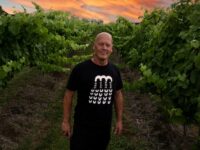
A proud Gurindji and Ngalakan man, Desmond Campbell took over as CEO of First Nations brand marketplace Welcome to Country in September 2022. During the past year, Campbell has helped shepherd the business through a particularly volatile environment – both for consumer spending, and for changing attitudes toward Indigenous culture. Inside FMCG talked to Campbell about Welcome to Country’s work supporting First Nations brands, ‘Black Cladding’, and the silver linings of the failed V
Unlock indepth features,executive

Unlock indepth features,executive
interviews and quarterly magazines
SUBSCRIBE NOW
Already a Premium subscriber? Log in
Just for$39.95per year
A proud Gurindji and Ngalakan man, Desmond Campbell took over as CEO of First Nations brand marketplace Welcome to Country in September 2022. During the past year, Campbell has helped shepherd the business through a particularly volatile environment – both for consumer spending, and for changing attitudes toward Indigenous culture. Inside FMCG talked to Campbell about Welcome to Country’s work supporting First Nations brands, ‘Black Cladding’, and the silver linings of the failed Voice to Parliament referendum. Inside FMCG: To start with, can you talk me through what Welcome to Country does?Desmond Campbell: Welcome to Country was launched back in 2019. It was launched as a platform to promote First Nations cultural tourism to the world, with an aspiration to support these small businesses and operators by providing that platform and connecting them to customers. Of course, after 2019, Covid-19 and the bushfires happened, and that meant the tourism industry crashed. And that’s when Welcome to Country pivoted to having an online retail marketplace as well. So we supply a retail marketplace for First Nations brands and advertise the tour operators as well. Fast track to present day. We’ve got a board of mostly First Nations representation, with just one non-Indigenous person, our funder, who has provided us with very generous support since the launch – and the majority of our staff are First Nations people as well. We hold around 220 businesses on our marketplace, and a majority of those are First Nations-owned.Being a First Nations operator, we are a not-for-profit social enterprise, and we try to put money back into these small businesses and their communities. Ultimately, it’s our vision to support the entrepreneurial vision of these First Nations businesses. In the 12 months that I’ve been here, I’ve seen the business morph into a beautiful advocate for First Nations businesses. We don’t need to do that, that’s not our role, but I find more and more, especially in my role as the CEO, we’re doing it anyway.It’s really important for us to ensure that we create a culturally safe platform for our suppliers and handle their products with care and that their cultural integrity is maintained.What sets First Nations brands in the FMCG space apart from the typical brands we see elsewhere in the market?It’s the engagement with culture, through native ingredients and practices. There’s a bigger thing here happening where Aboriginal and Torres Strait Islander people are connecting back to their culture through these products. This is why I love working at Welcome to Country: It allows First Nations people to stay connected to their culture, and share it on their terms. That’s a big reason why First Nations brands are different – they are an invitation for others to be a part of their culture. It feels like there’s a movement, not only from First Nations people but by Australians more broadly, where we recognise that Australians need to do better [in connecting and supporting with First Nations culture], and encourage First Nations people to enter the commercial world while maintaining their cultural integrity and not being expected to go outside of that to find success.I’ve seen products where Aboriginal women have done cultural harvesting to collect the ingredients to make soaps and creams, for example. It’s a really popular product, but they don’t make it to meet the demand, they only make what they can make based on how much they can harvest from the land without impacting the land. They’re only taking what they know will not disrupt that region, and will only take it during the right season. They’re driven by wanting to share their culture through the product, but also by wanting to make economic development toward independence. I’d love to talk about the social and collaborative aspects of First Nations businesses, which seem to support one another in their efforts. Can you talk me through that?Yeah, we know it, and we’ve seen it. I was just reading an article today that supports this, where Aboriginal businesses employ Aboriginal people. For whatever reason, there’s still a barrier to Indigenous people being employed in non-Indigenous businesses, but the more and more we see First Nations businesses operate, the more employment rates are getting better for First Nations people. We work with a lot of businesses across Welcome to Country, and not once have I witnessed any competition between them. If anything, there’s a drive to learn from and support one another, and we really want to capture and provide a space for that to happen in a way where each business feels supported through these exchanges. We’re the only nationwide First Nations-led platform in this space, so it’s important that we make space for that. And our relationships with suppliers are becoming less transactional, and more of a traditional relationship. That’s important to us. During the past few years, we’ve seen Australians more broadly want to support smaller businesses, especially First Nations brands. Can you talk me through what that’s been like?Human behaviour has definitely changed, and I think the reasons for this can be connected to people wanting to do better for the climate. People, more and more, are recognising that [supporting First Nations brands] is a way to sustainably take from the land, while also rejuvenating it and ensuring it can still produce. People want to be able to connect with products that are ethically sourced, sustainably made, and authentic. Sure, they’ll still go to other places and make a more transactional purchase, but when they land on our platform, they go through an experience of engaging with First Nations culture. Even if they don’t buy something, a seed has been planted, and they can see that First Nations businesses are in this space and have been for a long time. The demand is actually much higher than many First Nations brands’ capacity to deliver on it. Many are willing to scale up, with the right support, but not all of them want to do that. Many want to stay as small businesses and not get rich on meeting the needs of consumers. We have a ‘product development fund’, which is a small bucket of money that can be used to give grants to some suppliers to allow them to diversify their product or buy some equipment to make their products. Brands have been comfortable going through that process because we’re not a bank, it’s not a loan, it’s a grant and they pay it back to us by selling their products. We take a percentage of their sales to pay it back, so other suppliers can also get that support moving forward. They can use what they learn during this process to apply for other grants and loans. We might seem like we’re just a website, but we do a lot more behind the scenes. I’ve spoken to a few First Nations brands over the past year about non-First Nations brands using Indigenous messaging, artwork and ingredients, without permission or giving back to the community. Is this something you’ve seen at Welcome to Country?Straight up, if there’s First Nations imagery or ingredients that are being used by non-First Nations businesses without an agreement or partnership, that is not on. We need to stamp that out. Second to that, if there is a partnership, but it’s obvious that the First Nations brand in that partnership is just there to open doors, again, that’s not on. We see this all the time. It’s called ‘Black Cladding’. I get approached to be a part of partnerships with brands all the time that I have no connection with, and it’s because I’m Aboriginal, and you can see through those offers very quickly. We see it all the time, and it’s crazy. It’s embarrassing, and it’s hurtful. There are a lot of these products in souvenir shops and markets like Paddy’s Markets in Sydney, and they usually don’t let you take photos of them for a reason.When you have a society that is trying to reconnect with the oldest continuing culture on the planet, and they’re taking that first step, and are uncomfortable, but they’re trying, they could easily be led down the wrong path and end up supporting the wrong businesses. The majority of the brands we stock at Welcome to Country are First Nations-owned, but there are some that aren’t. We made the decision to keep them on the platform because we’ve done our due diligence to ensure that they do have partnerships in place.We’re not necessarily increasing that number, and we’re instead focusing on growing the number of First Nations-owned brands on the platform. This issue is worrying, but we’ve got First Nations people calling it out. We’ve got the [Indigenous] Art Code, we’ve got the First Nations Chamber of Commerce, and others that are really leading the way in how to do business in the First Nations space. And it’s important. As I said, First Nations businesses are employing the First Nations people that no one else is employing, which is making a better economy for everyone. I wanted to touch on the Voice to Parliament and take the temperature of how First Nations business owners are feeling post-referendum. What have you seen, and what does the pathway forward look like at the moment?We’ll go back a step first. When Welcome to Country were trying to decide how we would present ourselves leading up to the referendum, we started that process by asking our staff how they felt about it, and how they felt about their workplace talking about it publicly, or not. And there were diverse attitudes about it across the business. We also realised that, as a platform for First Nations businesses, we had a responsibility to ask our collaborators what they thought about it, and what they would be comfortable with us doing. Overwhelmingly, the majority of these First Nations businesses said that they highly supported us publicly backing the referendum, so we did.We did as much as we could with the platform we have and spoke very openly about it, and when I was challenged about it at town halls – I was approached by some guy who had printed out a list of Indigenous businesses and challenged me on how I could know what they wanted – I could point to the over 200 First Nations businesses we represented that were overwhelmingly supporting the ‘Yes’ vote. Following the referendum, there still is a sense of confusion. There are a lot of different emotions, and there’s sadness that turns into despair, which then turns into anger, which then turns into motivation to keep doing what we’re doing. We haven’t gone out to survey our partners since the referendum because we want to give them some time. It’s still very raw, but it’s heartening that so many Australians did want to see something like the referendum happen. And when it didn’t go through, they found other ways to support us. We had our biggest days of sales following the referendum. The 15th of October was our biggest day of sales, and at Welcome to Country, we really didn’t expect that. It gave my staff the motivation to keep going, and it gave me and our board that motivation. It also channelled money back into small businesses that are caring for the country – so that the Australians that voted ‘no’ can enjoy it.We still get a lot of backlash – racism, and people questioning whether our name is an issue – and we’re trying to be a bit of a buffer between that and the First Nations businesses. We know they can handle it, First Nations people have a lot of resilience, but it took a big hit [after the referendum].But to answer your question directly, we’re just getting on with what we’ve been doing. It’s been a rollercoaster, and it still is one. In some ways, it feels sad, and like society has moved on, but we’re coming together. Something else is that I feel like, for the first time, we saw what genuine allyship looked like. We were all very suspicious of what allyship looked like, and seeing non-Indigenous Australians share the weight of what was put on First Nations people during that time [was amazing]. They shared the hurt.Many people don’t want to leave it at just voting yes and moving on, they want to do more. They want to be able to show their support in their own ways, and in their workplaces because we’re all Australian.So, what does the next year look like for Welcome to Country? We’re trying to maintain a balance. As a social enterprise, we don’t have a lot of cash to just fund growth, so it’s important to make sure that the platform is healthy for our partners. So we’re focusing internally to make sure we’ve got our house right to support those First Nations brands in safely learning from one another and experts. As it stands, we don’t have enough room in our warehouse because we’re getting more and more suppliers and brands that want to be involved, and that’s great – that’s growth – but it’s also scary, because we don’t have a lot of money to get a big warehouse. So moving forward, partnerships will be a big focus for me – whether it be from philanthropic funders or corporate partnerships, we want to facilitate growth for our suppliers. We’re still in a bit of a start-up phase, and we’re finding our identity and growing into it. This interview first appeared in the January issue of the quarterly Inside FMCG magazine. Subscribe here.