

Australia’s fast‑moving consumer goods (FMCG) sector is under intense pressure. Retailers are demanding shorter lead times, tighter packaging compliance and flawless on‑shelf execution, even as labour markets tighten and energy and input costs rise.
Many manufacturers are still relying on fragile, manual or ageing packing lines that were never designed for this level of complexity, creating a growing gap between what plants can deliver and what major retailers now expect.
Across categories, operations leaders are grappling with the same question: how to increase throughput, protect quality and meet retailer standards without simply throwing more people and overtime at the problem. Manual pick‑and‑place, slow or inflexible case erecting and closing, and labour‑intensive palletising are all common bottlenecks that show up as micro‑stoppages, missed windows and rising operating costs. For plants supplying major supermarkets or export markets, that combination quickly becomes a strategic risk.
This is where RML Machinery is positioning itself as a specialist automation partner for FMCG and grocery manufacturers. With more than 40 years’ experience designing, building and servicing long‑lasting, high‑performance automation, RML focuses on turning “fragile, variable, manual, or ageing packing lines into reliable, high‑throughput, retailer‑compliant automated systems,” as sales lead Samuel Miller put it to Inside FMCG. The aim is not just speed, but also consistent product quality, fast SKU changeovers, and minimal downtime, so manufacturers can meet retailer requirements and avoid the hidden costs of rework, waste, and penalties.
From fragile lines to reliable, retailer‑ready systems
Miller says the core problem RML solves on the factory floor is unpredictability. “What our machinery does for our customers is eliminate unpredictable line stoppages, inconsistent pack quality, slow or costly SKU changeovers, inability to meet shelf‑ready or retailer packaging specs, poor traceability and high operating costs from labour, rework and waste,” he explained. “Most importantly, it frees our customers and allows them to maximise their human potential.”
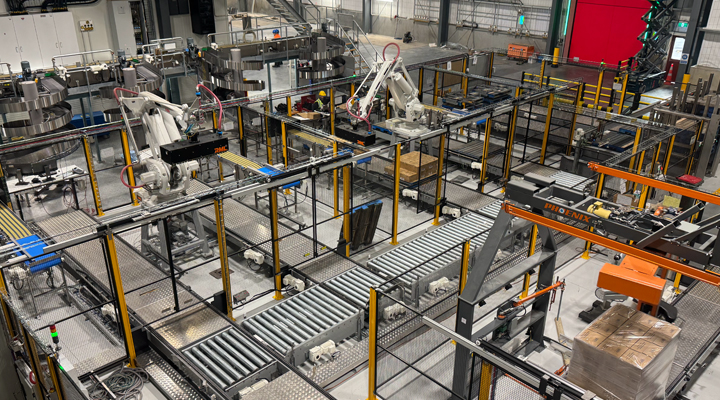
To achieve this, RML designs and builds a broad portfolio of world‑class automation, including case packing and cartoning machines, robotic automation systems, palletising systems, lidding and closing systems, butter sheet wrappers, assembly systems, case erectors and conveyor systems. These can be integrated with control and track‑and‑trace capabilities, and backed with customised installation and service plans so lines can reliably run at the speeds and formats retailers demand.
On typical FMCG and grocery lines, the biggest constraints are familiar: Manual pick‑and‑place in case packing, slow or inflexible case‑erecting and closing, unreliable collation or feeding that causes micro‑stops, poor traceability and slow palletising. RML tackles these pain points with robotic top‑ and side‑load case packers, integrated case erectors and closers, vision‑guided feeders, and automated palletisers, all designed to integrate into existing lines and handle SKU or pattern changes with minimal mechanical changeover.
Proven uplifts in speed, labour and OEE
The impact on speed and efficiency can be significant. Recent RML installations have seen line speed increases vary by product and format, but Miller pointed to concrete examples: a honey producer recorded a 30 per cent increase in production line speed after RML developed a dedicated machine for packing jars into cases. A customer packing milk powder pouches into cases saw a 150 per cent increase in line speed. On multi‑SKU lines, the ability to switch formats quickly with recipe‑based changeovers dramatically reduces downtime compared with manual packing.
Beyond headline speed, Miller argues that the largest, often underestimated productivity gains come from reduced micro‑stoppages, faster and more reliable changeovers and improved uptime. Modern RML packing lines are designed to be reconfigured by recipe rather than through heavy mechanical changes, and include integrated diagnostics and preventive service options. “These factors often drive larger Overall Equipment Effectiveness uplift than headline speed increases alone,” he noted.
The Oceania Dairy project illustrates how this plays out in practice. The company’s existing milk powder pouch line relied on manual handling and packing, generating frequent errors and rework and forcing staff to return at night to repack orders to meet tight deadlines. RML engineers spent time on site with the factory team in Morven, New Zealand, to understand the real‑world constraints before designing an integrated case packing and palletising solution.
Oceania Dairy had two clear goals: reach 20 tonnes per day of milk powder pouches packed and reduce staffing on the line from 16 to four, a critical target given the difficulty of securing temporary labour in their region. Within two months of the RML-developed equipment going live, the line was packing 20 tonnes per day – a 150 per cent increase in productivity. Within seven months, the plant had achieved its labour reduction goal, and in the first 12 months, the project delivered savings of $1.4 million. With global demand for milk products growing, that uplift in throughput and cost efficiency translated directly into greater export capacity and profitability.
People, safety and the changing skills mix
For many FMCG plants, labour dynamics are now a primary driver of automation. Plant managers often tell Miller they are facing labour retention difficulties, rising casual labour costs, variable performance from temporary workers and the risk of relying on manual skills that are hard to sustain. By automating end‑of‑line tasks, they can reduce operational risk and secure the throughput predictability required to plan production with confidence.
Critically, RML customers are not simply removing people from the line; they are redeploying them into higher‑value roles. Common pathways include machine supervision, line changeover teams, quality and inspection, preventive maintenance, skilled trades and continuous improvement. Miller noted that freeing staff from repetitive case packing and palletising opens up opportunities for upskilling and more technical responsibilities, a pattern echoed by customers such as Comvita, which has used RML case packing to redeploy staff to other parts of the production line.
Health, safety and fatigue are other major considerations. Removing repetitive lifting, twisting and pick‑and‑place tasks reduces fatigue and lost‑time risk, while better ergonomics and real‑time monitoring improve both safety and productivity. According to Miller, customers typically see fewer manual‑handling incidents along with improved morale and retention once high‑fatigue tasks are automated.
Building a compelling business case
For COOs and operations managers under cost pressure, Miller says the strongest levers in today’s automation business cases are labour cost reduction and lower agency or overtime spend, increased throughput that enables more orders and fewer late shipments, improved product quality and retailer compliance, and reduced downtime. RML often works with prospects to use real‑line metrics – hourly wage bills, current throughput shortfalls and lost sales from missed windows – to build short payback models linked clearly to capital investment.
The message to manufacturers that know they have labour and throughput challenges but are unsure where to start is simple: get granular on the data. Miller suggests asking a set of baseline questions about each piece of equipment – from staffing levels and sustainable run rates to downtime patterns, reject rates and asset age – to pinpoint where the biggest issues lie. “Once known, you can make informed decisions about what you need to do to mitigate these issues,” he said. “Contacting RML at this stage will give you a second set of eyes and ears to help provide you with an automated solution to solve the issues found.”
In an FMCG landscape defined by tight margins, labour volatility and unrelenting retailer expectations, that combination of detailed diagnostic thinking and proven automation solutions is exactly what many plants now need from their partners.
- To explore how RML Machinery can help you tackle labour, throughput and retailer‑compliance challenges on your own lines, contact their FMCG automation team to review your data and scope a customised solution here.


