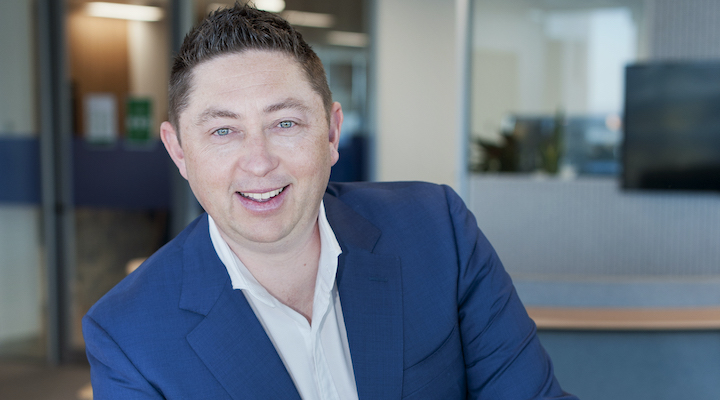

Earlier this week, Matthew Salter was named as the new General Mills managing director for Australia and New Zealand, having recently returned to Australia to take up the role after six years in leadership positions at General Mills in Europe. Here Salter shares his learnings from working within the Europe division, his plans to introduce new brands and categories in the future, and why he’s optimistic about the Australian industry. Inside FMCG: What have been the key achievements or lea
Unlock indepth features,executive

Unlock indepth features,executive
interviews and quarterly magazines
SUBSCRIBE NOW
Already a Premium subscriber? Log in
Just for$39.95per year
Earlier this week, Matthew Salter was named as the new General Mills managing director for Australia and New Zealand, having recently returned to Australia to take up the role after six years in leadership positions at General Mills in Europe.Here Salter shares his learnings from working within the Europe division, his plans to introduce new brands and categories in the future, and why he’s optimistic about the Australian industry. Inside FMCG: What have been the key achievements or learnings from working in that business over the last six years? Matthew Salter: We’ve gone through a lot of change over that period of time. When I first moved to Europe, we were really at the start of a journey to become a more global company. Our head office is in the US, but certainly there was probably limited connectivity between the different parts of the world. With our three global accelerators, Old El Paso, Nature Valley and Häagen-Dazs, we really focused on connectivity between your global community of network marketers, so we didn’t put in global structures as such, but relied on how we would draft, adapt and share ideas around the world. That was a significant step for us to really invest in building a snacking business behind bars. That was a relatively small business, we were about $40 million, one brand of Nature Valley crunchy bars, and then over that next four to five years we really built that business out into multiple brands, meeting different consumer needs, and pressing up towards $200 million. We have experienced intense stockpiling here in Australia during lockdowns, how did the pandemic impact the European business?Our strategy didn’t change but how we executed against that strategy really changed when the pandemic hit because of the level of uncertainty and inability to forecast what was going to happen next. That was certainly a huge leadership learning and a different way of operating for us as an executive team – really empowering and trusting our teams to make decisions quickly and move fast because every day was a new day. We would get into an operating cadence that was quite short term and what needed to happen to make sure that we were servicing consumers’ needs.What brought you back to Australia?I was always hoping to come back and lead the business here in Australia and the right opportunity came up. My predecessor, Peter, who’d been here for four years, came out from the US and was equally looking to return home. It was always a long term ambition for me to lead the Australian business having started out in stores as a merchandiser. I always had this idea and desire to make it through and run the business one day.Of course, the last 12-18 months did feel a lot longer, you feel the distance of Australia, relative to Europe when you’re told you’re not allowed to travel. Even though we wouldn’t have come home very often, maybe once or twice a year maximum, the fact that we couldn’t go home made us realise what we were missing.I think we will certainly come out of this pandemic, at some stage, stronger. What I’ve really appreciated, when I try to look for the positives, is that my family unit is stronger than it’s ever been. I’ve spent a lot more time with my kids, sitting down to dinner, some of those things that 18 months ago we would have talked about with our brand Old El Paso as being a challenge for families. I think that occasion has really come back through the lockdowns and I think it’ll stay because I think consumers are enjoying that connectivity and feeling closer to immediate family.What are your key goals for the next 12 months or so as leader of General Mills?I’m really kicking off by spending my time listening. Although I’ve worked in the business for a long time, I recognise that I need to unlearn some things that I think I know. Being away for six years, a lot has changed. And so, right now, I’m spending a little time with our team right across the organisation, understanding everything from culture, to how we’re being a force for good, to our branch strategies, how are we working with our customers etc. so that we can then path that next three-year journey of growth. For now, our strategy will remain very similar, where we’re looking to accelerate the growth of our core accelerator brands through increased innovation and really bring to life great ideas. We want to be, what we call, a “net exporter of ideas”. We think that ideas from Australia can travel around the world and grow our General Mills business in multiple markets, and we’ve got a long track record of punching above our weight.Are you hoping to introduce more brands and products or expand into new categories?We sit in growth-facing categories. It’s a fantastic place to be and we think there is a lot more category development and growth to be had in world foods, fresh meal solutions, in snacking and in ice cream and indulgence, so we think there was a there was a good growth platform to come with the brands that we have in the market today. And then equally I think you know we’ve had some success over time launching new brands, whether it is bringing Häagen-Dazs into the Australian market, bringing Nature Valley, or Fibre One more recently, in the snacks business into Australia. We have a wide portfolio of brands in the US, throughout Europe and Asia, and we have a lot of insights, category knowledge and capabilities, so we could certainly look to the trending spaces in Australia and New Zealand and bring in some of those brands where we feel like consumer needs are unmet.