Twenty years ago, many retailers regarded political and social neutrality as standard commercial practice, conscious that taking sides risked alienating customers. Today, many appear willing to wager the opposite. Five years ago, Lush deleted its major social media accounts in protest against young people’s mental health harms, Patagonia rewrote its ownership model in 2022 so that its future profits would fund environmental protection, and, just this month, Australia’s Ringers Western defend
Unlock indepth features,executive
interviews and quarterly magazines
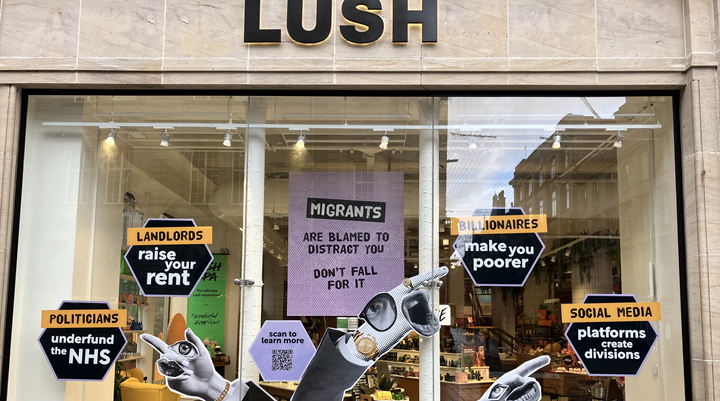
Twenty years ago, many retailers regarded political and social neutrality as standard commercial practice, conscious that taking sides risked alienating customers. Today, many appear willing to wager the opposite.Five years ago, Lush deleted its major social media accounts in protest against young people’s mental health harms, Patagonia rewrote its ownership model in 2022 so that its future profits would fund environmental protection, and, just this month, Australia’s Ringers Western defended its sponsorship of Karl Stefanovic’s controversial podcast. Retailers have always sold products, but increasingly they are also recognising that public opinion can create loyalty, provoke opposition or perhaps redefine the audience they ultimately serve.Whether the issue is climate action, refugee rights or political speech, that wager has become one of retail’s most intriguing commercial calculations.This month, regional apparel retailer Ringers Western found itself confronting that reality. After criticism over its sponsorship of Karl Stefanovic’s podcast following his interview with Tommy Robinson, chief executive James Salerno Jr defended the partnership as an expression of free speech. “Karl is giving a view to Australians, and he’s giving a voice to Australians, and we support that. We support free speech,” he said.The reaction was immediate. A slew of Instagram users applauded the retailer, while others declared they would stop buying Ringers Western products or burn clothing they already owned. The company responded by insisting it was taking neither side. “Ringers aims not to be left or right but respects the principles of free speech,” it said.The episode illustrates how quickly commercial decisions can become political ones. Research by marketing firm Hotwire found that 52 per cent of Australians consider a company’s social or political position when deciding whether to buy from it, while almost one-quarter are less likely to purchase from businesses whose views conflict with their own.For retailers, then, the question is no longer simply whether to take a stand. It is whether customers believe that the stand is genuine.Few brands have embedded their values as deeply as Patagonia. In 2022, the founder, Yvon Chouinard, transferred ownership of the then-US$4 billion company to the Patagonia Purpose Trust and the Holdfast Collective. The arrangement ensured voting control remained with a trust protecting Patagonia’s mission, while profits not reinvested in the business would be distributed annually to fund environmental protection and climate action.Chouinard’s move, hailed as one of the most consequential acts of corporate philanthropy in modern business, nevertheless strengthened consumer sentiment in the days following the announcement. In fact, YouGov BrandIndex reported Patagonia’s overall brand health score rose from 14.9 to 17.7.If Patagonia represents activism embedded in corporate ownership, Lush demonstrates how values can shape everyday retailing. Since its founding in 1995, the cosmetics retailer has woven campaigning into its business through window displays, fundraising products and community partnerships supporting human rights, Indigenous recognition and animal welfare. In 2021, it extended that philosophy by deleting its Facebook, Instagram, TikTok and Snapchat accounts over concerns about young people’s mental health.Reflecting on that decision during a conversation with Inside FMCG last year, co-founder Rowena Bird recounted, “It was a big discussion. Then, when the Facebook exposé came up, it was just like, ‘Yeah, we don’t want to be part of this.’” Customers were encouraged to use the company’s own platform, the “Lush Club”, instead. Before leaving its social media channels, co-founder Mark Constantine estimated the decision could lose almost US$20 million in short-term sales. The feared collapse, however, never materialised, and the following Christmas became the company’s strongest festive trading period in years.For Hope Velonias, Lush’s PR manager for Australia, that outcome reflects something more fundamental than a successful commercial decision. “It’s easy to speak about values when they’re trending,” she told Inside FMCG. “It’s much harder when those decisions might cost you sales, attention or convenience.”Whether that resilience endures as political association becomes more closely entwined with the brand is a question only time can answer. Patagonia’s ownership overhaul, Lush’s departure from major social media platforms, and Ringers Western’s defence of a contentious sponsorship all carried different commercial risks, yet each accepted that conviction would become part of the product customers ultimately bought.Some consumers rewarded those retailers’ decisions, others rejected them entirely, but the greater commercial question is whether those values remain credible when tested by controversy, financial consequence and public scrutiny.Further reading: Lush co-founder Rowena Bird talks 30-year business journey and biggest takeaways.