
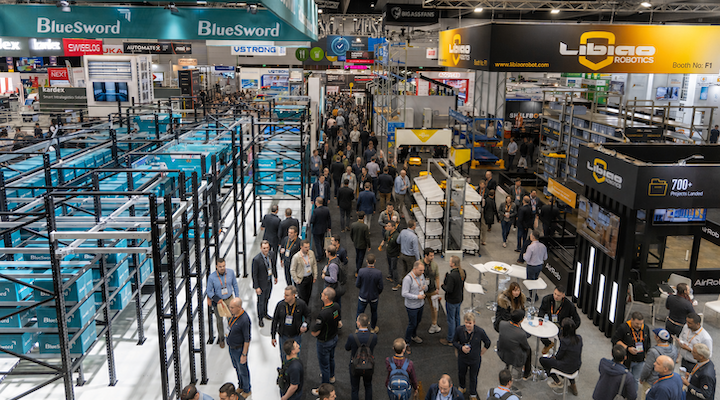

At this year’s CeMAT Australia, the discussion around warehouse transformation shifted noticeably. Rather than focusing on whether businesses should adopt automation, the focus was centred on how automation, software, equipment and people can work together to improve productivity, resilience and operational performance.
Speaking with Inside FMCG, James Redshaw, senior exhibition manager for CeMAT Australia and CeMAT Southeast Asia, said the event reflected a broader evolution across Australia’s warehousing and supply chain sector. The emphasis is moving beyond individual technologies towards practical, integrated solutions that address immediate operational challenges.
He identified five themes that are increasingly shaping investment decisions across the industry.
Automation with a business case
According to Redshaw, the question is no longer whether to automate, but when and how best to do it, with businesses increasingly focused on using automation to solve specific operational constraints.
“Businesses are looking for solutions that address immediate constraints around labour, space, throughput and cost, rather than automation for its own sake,” he said.
That shift was evident across the exhibition floor, where solutions ranged from automated storage and retrieval systems and shuttle technologies to goods-to-person systems, warehouse software, and integrated material-handling equipment. Demonstrations highlighted how automation is increasingly being deployed to improve warehouse density and throughput while delivering measurable operational outcomes.
Robotics become part of everyday operations
Redshaw said robotics has progressed beyond being viewed as an emerging technology and is increasingly becoming an essential, practical tool for improving day-to-day operations, safety and efficiency.
Rather than attracting attention through novelty, autonomous mobile robots, robotic arms, automated picking technologies, and AI-enabled systems were presented as tools that support day-to-day warehouse and manufacturing activities.
Visitors were able to explore robotics across a range of applications, from improving individual workflows through to supporting highly integrated fulfilment facilities, reflecting the growing maturity of robotics adoption across Australian operations.
Safety moves into operational design
Safety also emerged as a strategic consideration rather than simply a compliance requirement.
Redshaw observed growing interest in technologies that improve the interaction between people, vehicles and automation, improving visibility, supporting safer movement through facilities and reducing safety risks around moving equipment.
The exhibition showcased safety barriers, machine guarding, pedestrian protection systems, racking solutions, forklift attachments, tyre technologies and fleet management innovations. The Australian Forklift Championship, held throughout the event, reinforced the importance of operator skill, precision and safe materials handling.
He noted that safety is increasingly being considered alongside workforce capability and automation strategy, with businesses seeking solutions that support both productivity and employee wellbeing.
Electrification gathers momentum
Electrification was another area attracting significant attention as organisations continue to evaluate the operational and environmental benefits of electric materials-handling fleets.
Redshaw said businesses are increasingly exploring how electric equipment can be integrated alongside traditionally powered fleets, with greater consideration being given to charging infrastructure, battery management and the power requirements needed to support growing electric capability.
Electric forklifts, battery technologies and fast-charging solutions featured prominently throughout the event, reflecting the sector’s growing focus on practical implementation rather than future potential.
Connected fulfilment becomes an objective
Pressure to fulfil orders faster, more accurately and with greater resilience continues to drive investment in connected warehouse operations.
According to Redshaw, organisations are increasingly looking beyond standalone technology purchases and instead focusing on how systems, automation and data can work together to support fulfilment performance.
Warehouse management and execution software, inventory optimisation platforms and integrated fulfilment systems demonstrated how greater connectivity can improve visibility, decision-making and operational efficiency across increasingly complex supply chains.
Bringing strategy and implementation together
Beyond the exhibition floor, many of these themes were explored through the event’s Knowledge Theatre, where senior supply chain leaders, manufacturers, retailers, logistics providers and technology specialists examined the strategic decisions underpinning operational transformation.
“The theatre’s purpose is to extend the conversation beyond the technology alone, exploring the decisions, operating models and implementation challenges involved, as well as the opportunities that can follow when those challenges are addressed,” Redshaw said.
Sessions examined investment strategies for automation, the operational value of robotics and artificial intelligence, approaches to system integration, warehouse design, retail fulfilment, workforce capability, safety and supply chain resilience.
“There was also strong attention on electrification and the infrastructure required to support electric fleets, along with the changing relationship between people, automation and safety in modern warehouses,” he said.
“Case studies, panels and practical discussions gave visitors a clearer view of what is working in Australian operations today, what requires careful planning, and where the sector is heading next.”
An industry entering a more mature phase
The themes emerging from CeMAT Australia suggest Australia’s warehousing and logistics sector is entering a more mature stage of technology adoption. Rather than pursuing automation as an end in itself, organisations are increasingly assessing how technologies can be integrated to deliver measurable improvements across productivity, safety, workforce capability and fulfilment performance.
This year’s CeMAT Australia, co-located with Industrial Transformation Australia, attracted 245 exhibitors and 6156 unique attendees at the Melbourne Convention and Exhibition Centre from June 23 to 25.
The event returns to Sydney Showground from July 27 to 29 next year, reflecting continued momentum across the sector as businesses focus on practical implementation rather than technology in isolation.


