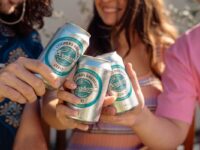
Despite having 10 employees and being just four years old, the alcoholic drinks brand Fellr is everywhere. Stocked in over 5000 stores and venues Australia-wide, the brand is projected to reach sales of $18 million (and 5.5 million tins and schooners) this financial year. Inside FMCG spoke to founders Will Morgan and Andy Skora on how they’ve achieved all this success while still being such a small business.
Inside FMCG: Where did the Fellr journey begin?
Will Morgan: Andy and I worked together at [French winemaker] Pernod Ricard, so we’ve both been in beverages for 10 years plus. Previously, I worked for a small rum start-up, Stolen Rum.
Andy Skora: Will and I both wanted to start our own business, and just started chatting about it. We saw the seltzers kind of growing in the States, and then also premium RTDs [ready-to-drink products] in New Zealand, and just kind of noticed there was a big gap in the market in Australia in terms of products in the RTD space that spoke to a younger generation.
WM: We kind of knew that this wasn’t going to be a gap for long. We knew that we’d have to move very quickly and do something that really was unique and stood out. We knew that there were going to be about 30 or 40 other brands that, you know, just rip off White Claw: skinny white can, round logo, wave references. So for us, it was just kind of steering well away from that and creating something that we knew really spoke to an Australian audience.
What was the R&D process like?
AS: It was in the middle of lockdown, actually. When we first started out, we were sneaking into each others’ apartments and trying to put together the formulation ourselves. Then we eventually partnered with a really good food scientist and worked closely with him to perfect that formulation and create our spec sheets. Will and I both being in the alcohol industry for a long time, we kind of knew what we wanted. We were able to kind of expedite that process, probably faster than someone who hadn’t been in the industry.
WM: We tapped into cocktail culture and the flavour trends coming through that space. We initially launched with two flavours, but very quickly – after 10 months to a year – we pivoted to new flavours that we saw seeding at market. That’s the benefit of being small and agile like us. One of the reasons we decided to move on from those bigger companies is that we could move very quickly.
How did your beverage industry connections help you find a foothold?
AS: They definitely helped once we came out of lockdown and were able to chat to all those on-premise bars and restaurants again and get our product in there. But when we first launched, everything was closed for a long time in that on-premise space. We had to launch this in retail. That meant independent bottle shops, because again, Dan Murphy’s and BWS and the like don’t let small brands in on a regular basis. So we had to start just knocking on the doors of the independent bottle shops.
When it came to pitching to retailers, what do you think helped you get in the door?
AS: As Will pointed out, we knew that there was going to be a ‘sea of same’ out there when it came to these styles of RTDs, in terms of the visuals, the brand identities, and what they were trying to convey to the consumer. A lot of them were going to lead with the health benefits in terms of lower calories, lower sugar. So we kind of went the opposite direction, and really wanted to create a lifestyle brand that was visually appealing on the shelf as well, and kind of stood out. We ended up going in the squash beer cans instead of the slim lines. It’s just a much different presence on the shelf.
How else do you stand out in such a crowded market?
WM: First and foremost, we created Fellr to talk to the youth culture of Australia. We take cues from Australian colloquialisms, beach culture… and that unique Aussie stoke for life. We try to bring that into our comms and our visuals. That kind of translates into a lot of the activity we do: working with local artists and local creatives. Bringing it down to a local level just builds an authenticity where you’re not just trying to shove a message down someone’s throat. And, if you can have a liquid that follows through, and it’s just delicious, and people like it… you’ve kind of got this viral product that can snowball on itself. Friends will tell their friends, and that type of thing.
AS: We don’t have the big budgets, but also we’ve always been cautious not to go down that influencer route, too. We’d rather, as Will said, use ambassadors who are creatives in the local area…instead of just someone holding up a can and trying to get you to drink it, which is the least authentic thing you could probably do.
What key actions or initiatives do you think were most important in getting you where you are today?
WM: Definitely leaning into partnerships. As a small brand, when you are trying to stand out from the competition, I think working with interesting partners does make a big difference. We worked with Messina on a sorbet seltzer series, then they did some Fellr flavours of their Gelatos, which they had in store for about a week or two. That’s been a really awesome activity that gets a lot of customers excited.
AS: We do a lot of activations and on-premise events. On the Messina piece, we partnered with a lot of our on-premise accounts to bring that activation to life and allow consumers to actually interact with the brand, get to understand it, have a good time with their friends, and experience the brand in a fun environment. And when we launched, I think we were the first seltzer on tap. A lot of people thought we were crazy trying to launch a seltzer on tap and all. But now, I think now we’re the number one seltzer, and one of the largest RTDs as well.
What challenges have you faced so far in your business journey, and how have you addressed or overcome them?
WM: Quitting our jobs and then six weeks later, Covid-19 hitting. We obviously had to be very, very, you know, reactive there. Operations and production challenges have also always been difficult, as with any kind of business where you scale up this quickly. We’re four years in now and we’ve had four different production partners. We were actually out of stock for a month, and we’d just secured a couple of major ranges with some big customers. The first one, they dropped us. So we ended up having to figure out which stores we could contact to buy back stock that wouldn’t trigger a reorder and cause them to sell it back to another store, just so we could keep the relationships going.
Has the cost of living crisis affected you?
AS: We’ve seen that the rate of sale is down compared with the previous years, but we’ve been lucky enough to have a really strong team, and they’ve driven a lot of new distribution points for us. We’ve seen some consumers either leaning towards less expensive drinks or looking for value for money. We’ve combated that by bringing out some new products that are more bang for your buck. We brought out our double range, which is higher ABV, so more standard drinks per dollar. And then we’ve also brought out pack formats that are different – 10 packs that give you more value for money.
What’s on the horizon for Fellr?
WM: Over the last year, we’ve been gradually moving beyond the seltzer category. We’re looking at what other categories make sense for the brand, and what other line extensions and exciting opportunities exist within our current wheelhouse as well. So, lots of new products and lots of innovation.
This story was originally published on Inside Small Business.