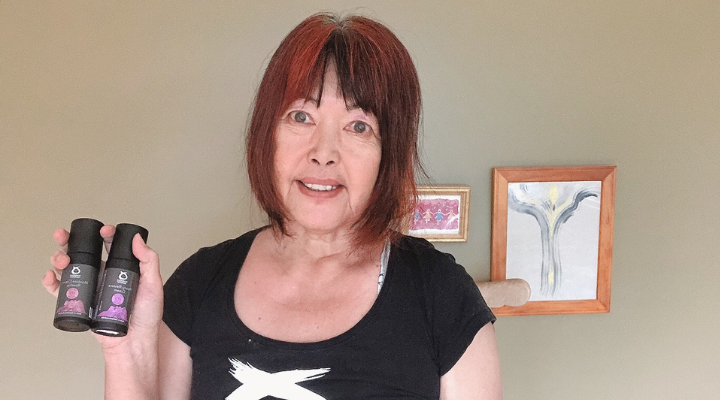

Ami Nakamura started her organic cosmetics business, Harmony Harvest, in 2002 – but it took decades to truly find her feet as a business owner.
For years, the entrepreneur faced numerous sales setbacks. She spent another 10 years striving to meet the strict requirements for organic certification. But Harmony Harvest celebrates its 23rd anniversary this year, and Nakamura still believes in her business dream.
“I want to heal people’s skin,” says the Japanese-born entrepreneur, who also runs a health retreat in Hobart. “If you have great vision and passion, just go straight.”
Getting organic certification
Nakamura has a deep commitment to natural healing remedies and knew from the start that she wanted organic products. But to sell organic products in Australia, she needed to comply with Australian Certified Organic (ACO) standards.
“It’s crazy difficult,” Nakamura says. “For example, there is a very small limit for emulsified things… Making formulations is not very hard for me, but we have to follow ACO regulations.”
What followed was years of trial, error, effort, and expense. Ami says that hair products in particular were very hard for her to manufacture while abiding by ACO regulations. At her wit’s end – and with her hair in dreads from testing her own prototypes – Ami turned her focus from ACO certification to Cosmos certification. While ACO is an Australian certification, Cosmos certification is recognised internationally – including in Australia. It focuses on cosmetic and personal care products, making it relevant in Nakamura’s case.
“Cosmos allows the use of coco glucoside,” she adds. “But Cosmos regulation may be harder than ACO’s… Because [manufacturers] have to have 100 per cent organic certification on their ingredients.”
After setting her sights on Cosmos certification, it took Nakamura another three years to find all-organic ingredient suppliers to align with its standards. But the business owner never gave up, and her entire range is now Cosmos-certified.
Sales struggles
When Harmony Harvest’s products were finally ready, Nakamura started out trying to supply spas. But the entrepreneur quickly found that the B2B world was a cutthroat one.
“That world is about politics,” she explains. “It’s almost impossible to get into.”
When she went to trade shows in Sydney, she found little appetite for her organic products among buyers.
“They were not interested in anything,” she says. “They want ‘instant beauty’. And I thought ‘okay, this is not my industry’.”
Discouraged, Nakamura decided to try trade shows in her birth country of Japan. This was the first time she gained traction; a major Japanese distributor offered her a meeting, claiming they could put her products in 100 shops around the country.
But the entrepreneur soon realised there was a catch. The distributor wanted to buy Harmony Harvest’s products for a fraction of the retail price, and told Nakamura that she needed to send presenters to every shop. The offer was a no-go for Harmony Harvest.
A new direction
While all this was happening, Nakamura got an offer to buy her brand from a large American beauty company.
“They said, ‘Okay, we can buy your brand because you are organic’,” she says.
In other words, large companies wanted to capitalise off her hard-won organic certification and the decade of effort she had put in to comply with Cosmos standards.
“Because I had spent about ten years of hard work, and this is my baby, I said ‘no’,” she explains. “I don’t want to make their money, you know? I want to heal people’s skin.”
With trade shows a let down, and new clarity about her commitment to full ownership of the brand, Nakamura decided to switch her sales strategy to B2C.
“The middle people always want to rip off or take over my brand,” she says. “So now I just stick to B2C. And it’s very difficult.”
After deciding to sell directly to consumers, Nakamura saw a need to invest in her business’ branding and marketing – yet more expenses for a business that had already struggled so much.
“It’s very hard with money,” she says, “I have no money to buy my shoes or clothes or anything I need.”
Despite the financial strain, Nakamura says she has invested $45,000 in e-commerce coaching and brought in a professional product designer to develop appealing packaging. She also has a small marketing team of three to help her with online content marketing.
Nowadays, Nakamura says she’s found her feet selling B2C and marketing her products through educational skincare content.
“They gave us a huge amount of coaching,” says Nakamura of her e-commerce program. “Now I have confidence in what to do.”
It’s been a gruelling journey for Harmony Harvest, but Nakamura has never lost sight of her dream. Like many business owners, she presses on through hard work, determination, and an undying passion for her venture.
This story was originally published on Inside Small Business.