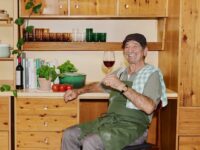
Farmers have embraced the concept of the circular economy long before it became a buzzword. But an Australian entrepreneur is helping them convert produce that might otherwise have gone to waste into valuable income – and at the same time creating shelf-stable meals for consumers at a price point that resets value perceptions.
“Farmers are the original recyclers and repurposers, but over time, the industry around them has changed,” explains Kelly Johnson, founder of Woodlane Orchard. Woodlane rescues produce, and the convenience meal company Sphiker, which Johnson also co-founded, uses some of the repurposed food as ingredients.
Major food brands, processors and retailers have developed standards for fresh produce and processed foods, shaping how consumers judge what is great and what is not. One of the consequences of that is ‘ugly’ produce that might have visual damage from hailstorms or an odd shape, is often shunned in favour of perfectly shaped fruit and vegetables that supermarkets showcase as the ideal product.
“It used to be that you grew whatever it was, and however it came off the tree, you ate it. You didn’t even think about it,” shared Johnson on Women Transforming Food, the monthly podcast from G100 and Inside FMCG, hosted by Amie Larter, CEO of Octomedia, Inside FMCG’s publisher, and Angeline Achariya, Asia Pacific chair of the Food Systems Innovation and Resilience Wing, G100 Mission Million.
“But the big guys have come in, and they’ve decided what’s good to eat and what’s not good to eat. And the farmers are the ones who lose out as a result. When I meet with a farmer, I never preach about sustainability. That would be really insulting.”
Instead, she invites them to show her what’s going to waste and find out where she can fit into their business. Then she shows them how they can make money out of that produce.
One of her favourite examples of Woodlane Orchard’s success is when a farmer had a paddock full of zucchini that was going to go to waste due to hail damage. “When I looked at it, I saw an opportunity; when he looked at it, he saw waste. When I told him we could turn this into something edible that’s going to make you profit, he got excited, and I got excited. That was one of the first times I realised that I could change the way they were thinking about the waste they were being told they had on their properties,” says Johnson.
“Most farmers come to me embarrassed.” They have this horrible crop they don’t want and have no idea how to dispose of it, and they tell her to take it for free. To them, it is waste.”
But accepting it for free defeats the whole purpose of Johnson’s mission. She says Woodland pays farmers for what they grow.
“I want to put money into farmers’ hands, and I will pay them a premium because when I dry that product, it’s going to come out perfectly fine. I can use the tiniest little bit of dried produce to make a really delicious, affordable meal.”
The key to Johnson’s solution is dehydration. Her business separates the various parts of the crop and dries them, maintaining the nutrients and preserving the flavours until meals are made.
“The approach is really simple: We test it, we dehydrate it, grind it and taste it. Then we value add to it. We’ve got to look at its nutritional value, its colour, how pretty it is, and whether it is palatable to the customer. Then we design the product around that.”
Single-serve meals for singles
Sphiker’s single-serve meals are made for solo diners, older adults, children, hikers, adventurers and anyone seeking healthy convenience meals, delivered Australia-wide. Think risottos, curries, chow mein and desserts from $6 each.
“Most people tell me it’s impossible to make a meal at that price. But I’m using what otherwise would be waste.”
She cites pomegranate fluff – the froth that comes out when making pomegranate juice from the seeds – which is traditionally washed down the drain. “We put that froth into fruit bark and made peach and pomegranate fruit bark, and it’s delicious.”
She urges farmers to view produce as a whole: Get inventive and get brave. There are businesses like mine everywhere that will take that produce. There are juicers, and there are all sorts of different places that will buy surplus produce from you.
One example is how she created ratatouille after a farmer brought in a massive surplus of eggplant. “I had never used eggplant before. What was I going to do with it? So I created ratatouille, and the farmer got very excited. He had to try it. He couldn’t believe that I was able to do that from a dried product.”
In another example, a farmer had 1000kg of apples that they did not want to waste. “We took them, we dried them, and we gave them half of the dried value back. Maybe they would get a dollar a kilo for their apples. So that would be $1000.
After Woodlane dried the apples, the weight was down to just 10 per cent, or 100kg. The farmer took half that volume back and sold it for $50 a kilo. Rather than wasting $1000 worth of apples, they earned $2500. “When you can start to talk to them like that, the lights come on.” They can’t believe someone else processed the product for them, and they more than doubled its value. “That’s the kind of thing that we’re starting to talk about now and having a bit of fun with.”
Sustainability may be at the core, but quality is foremost to the consumer
While Johnson wants to save produce from going to waste and reward farmers, she acknowledges that mission is of little interest to the consumer on their journey to find food.
“They want good food. They want it to taste good. They want it to look good. So I’ve had to learn some hard lessons over the last couple of years, where I’m banging on about how you should be thinking sustainability, and my product’s the most sustainable product on the market, and you should buy it because of that.
“I’ve learned that the sustainability angle is the cherry on top. Sustainability is an added bonus they get when they buy our product.”
- Listen to the podcast to hear Johnson talk of how she disrupts the way older generation farmers think, encouraging them to embrace change, the problem with pilot programs when businesses need to adopt circularity at the core of their business model – and what it’s like to hand-peel three tons of pumpkin.