Italy’s new Trade Commissioner to Australia, Alessandro Lamura, recalls his arrival in Australia as a “trial by fire”.
“Within hours, I was on a flight to Melbourne with my team to deliver the Italian National Pavilion at Fine Food Australia 2026,” he shares with Inside FMCG. “On top of that, we welcomed the president of the Italian Trade Agency, Matteo Zoppas, a rare and much more significant visit, given the sheer distance between Italy and Australia. It was an incredible way to begin: Intense, high-profile, but immensely rewarding.”
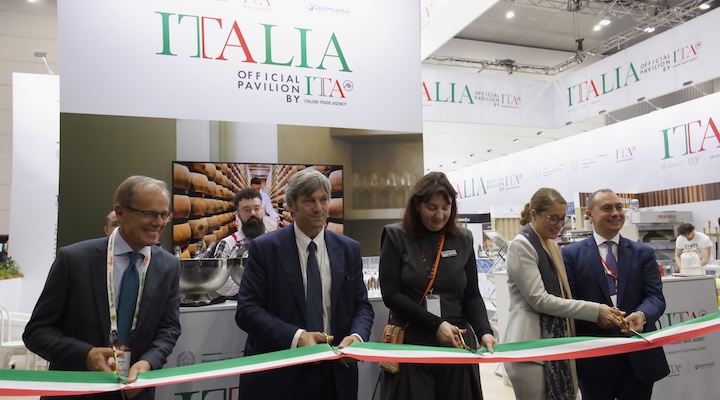
Lamura, who also serves as director of the Italian Trade Agency Sydney, where he has been based since August 31, previously served as deputy trade commissioner to the UAE, Pakistan, and Oman. He says the contrast between Australia and the Middle East markets could not be starker.
“The biggest difference is the nature of the market itself. The Emirates is a fast-paced regional trade hub, where success is often driven by free zones, logistics, and re-exports across the Middle East. Australia is the opposite: A high-value final-destination market.
“Italian products, whether advanced machinery, premium food, or fine wine, are purchased primarily for domestic consumption, which creates long-term commercial opportunities rather than pure trade.”
One of his early observations was how relationship-driven the Australian market is. “Business moves at a more measured pace, but partnerships tend to be deeper and more durable. At the same time, Australia’s vast geography and biosecurity standards make market access more complex, so succeeding here requires patience, planning, and local engagement,” Lamura says.
“I’ve traded the speed of Dubai for the opportunity to help build Italy’s presence in one of the world’s most sophisticated premium markets.”
That sophistication was on display at Fine Food Australia, which he says exceeded his expectations.
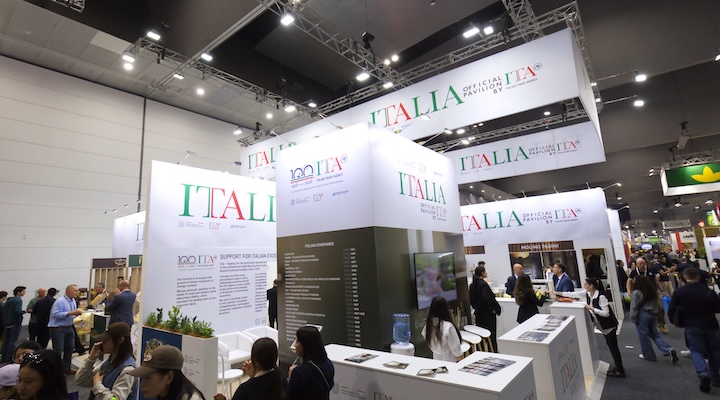
“What’s remarkable is how quickly consumer demand for premium deli products, authentic regional specialities, and fine Italian wines continues to grow in Australia. There is a genuine appetite for quality, provenance, and education, and that’s very exciting for Italian producers.”
The Italian Trade Agency sees its role as that of a neutral institutional partner, connecting supply with demand rather than negotiating on behalf of companies. “We study the local economic environment, facilitate introductions, verify opportunities, provide market intelligence, and support both sides throughout the process. Businesses lead commercial negotiations, but our goal is to create the conditions for successful, long-term partnerships.”
Lamura says the openness of the Australian market and the genuine appreciation for Italian food, quality and culture have impressed him during his first weeks in the role.
Over the coming years, he hopes to build an even stronger connection between the two nations’ food industries.
“Italy has an extraordinary food heritage, but also a great capacity for innovation, and I believe there is still enormous potential to bring more Italian companies, products and ideas to Australian consumers and businesses.
“For me, the opportunity is not simply to sell more Italian food in Australia, but to help Australian consumers discover the extraordinary breadth of what Italy has to offer. This is what makes the role particularly exciting: Not simply promoting Italian food in Australia, but building relationships and creating opportunities that can last well beyond a single trade mission or exhibition.”
During the remainder of this year and into 2027, Lamura expects the agency to build on the momentum it has already created and further expand Italy’s commercial presence in Australia. “That means increasing our visibility, strengthening our relationships with Australian businesses and institutions, and identifying new channels through which Italian companies, particularly smaller producers of excellence, can access this market.
“At the same time, I think there is an important opportunity to sharpen the way we communicate what Italy represents. We want to tell a more authentic, clear, and relevant story about Italian excellence: the Italy behind the products, the companies, the innovation, the craftsmanship, and the extraordinary diversity of our regions and industries,” he continues.
“Australia is an increasingly sophisticated market, and I believe our communication needs to reflect that sophistication. Our role is not simply to promote a country; it is to explain, in a straightforward and credible way, why Italian companies and products are relevant to Australian consumers and businesses today.”
During the coming 18 months, the agency plans to focus on retail grocery and foodservice. “Australia is an increasingly sophisticated and receptive market for Italian food,” shares Lamura. “We see a lot of room to go beyond the products that are already well established and bring a much broader range of Made in Italy to Australian consumers.”
While the agency will continue to support the core categories that are already performing well, such as pasta, extra virgin olive oil, wine, cheese and cured meats, it also plans to place more emphasis on premium, authentic and differentiated products; from bakery and confectionery to specialty ingredients, preserved foods, sauces, frozen products and new food solutions.
“Foodservice will be particularly important. Australia has a very dynamic hospitality industry, and Italian cuisine has a strong and growing following. We see opportunities not only with Italian restaurants, but also across hotels, catering, institutional foodservice and the wider professional hospitality sector.
“At the same time, we want to strengthen the presence of Italian brands in both mainstream and premium retail. That means working closely with importers, distributors and retailers to give Italian products greater visibility and, importantly, a more consistent presence on Australian shelves.”
Meanwhile, after the success of Fine Food Australia 2026, the Italian Trade Agency team is already planning for next year’s event. While Lamura does not want to reveal too much about those plans just yet, he teases that Italy’s presence will be “even more ambitious” than this year’s pavilion.
“We are working on expanding the Italian experience with a stronger educational component, including a live cooking and demonstration area designed to showcase Italian products, as well as the culture, techniques, and stories behind them.”
Lamura says the president of the Italian Trade Agency’s visit to Australia in August sent a strong institutional message about the strategic value of the Australian market and the role of the agency’s Sydney office in the region.
“His visit elevated the visibility of our exhibitors, strengthened relationships with Australian stakeholders, and reinforced the work our team has been doing every day on the ground.
“Just as importantly, President Zoppas gave us a clear strategic direction for the future: Expanding Italy’s presence at key Australian industry events, while developing stronger partnerships with major grocery retailers and e-commerce channels to bring more authentic Italian products to Australian consumers.”