
When grocery prices show no sign of easing and Australians are keen to cut their bills by any means, the Greens Institute has revealed a plan.
Through the Green Institute, a public policy think tank, the party has proposed seizing 200 Coles and Woolworths supermarkets, prompting the Federal Government to launch a nationwide public chain called Fair Go Grocers. The goal is to slash prices on essential groceries by 30 per cent and offer an average storewide saving of 22 per cent.
The estimated cost would be $25.1 billion over five years, funding the construction of 624 supermarkets and 13 distribution centres nationwide, including those compulsorily acquired shopfronts. The Greens have also pledged $300 million towards the project, arguing that Coles and Woolworths have maximised profits by inflating grocery prices, squeezing consumers at the checkout and paying Australian farmers too little for their produce.
“Parents shouldn’t be standing at the supermarket wondering if they have to take things out of the trolley to afford their kids’ lunches,” said Victorian Greens leader Ellen Sandell.
A solution, a gamble, or a fantasy?
Greens called this a solution to smash the duopoly. However, running a supermarket is harder than it looks, and operating it would require some of the economy’s most complex supply chains, according to Dr Balaji Makam at RMIT University’s School of Economics, Finance and Marketing.
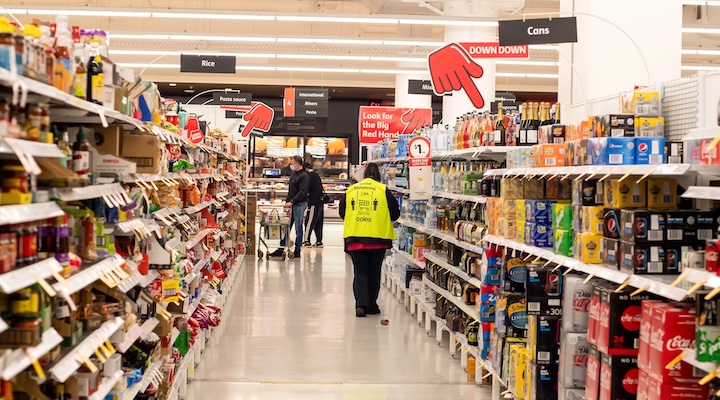
A supermarket may seem simple from a customer’s point of view. Yet behind the scenes, everything from fresh produce and meat to dairy and frozen goods relies on refrigerated transport and temperature-controlled warehousing, with thousands of suppliers and inventory that must be strictly managed.
Coles and Woolworths in particular didn’t build these systems overnight, Makam said. Forcing them to sell 200 stores with such complicated operating systems to a government competitor is rather an “unprecedented, extraordinary” intervention.
Should governments be the player?
The RMIT expert has raised a broader policy question.
Given governments’ traditional role as market regulators responsible for enforcing competition laws and protecting consumers, would entering the retail sector create a structural conflict by making them both regulator and market player?
The professor stressed that bureaucracies are “inherently slow”, especially when it comes to adapting to consumer trends and the global supply-chain shocks that the retail segment generally endures.
“They are built to regulate markets, not run them. When you mix the two, it will lead to expensive inefficiencies.”
Is it worth the bet?
While consumers are frustrated about grocery prices, grocery shopping is not only about price.
“A publicly owned supermarket may sound like an attractive response to cost-of-living pressures, but grocery shopping is about much more than price,” Makam said. In a 2025 inquiry, the ACCC raised similar concerns about the dominance of the Woolworths and Coles duopoly, and the need to strengthen competition, but recommended different remedies.
Beyond affordability, Makam continued, shoppers choose supermarkets for convenience, product range, freshness and trust, which major retailers have built over decades and would be difficult to replicate quickly. Meanwhile, he believes the bigger question is whether taxpayers would get better value from government-run supermarkets or policies designed to boost competition across the sector.
“If the goal is lower prices, governments could strengthen competition laws, improve supply chain efficiency, support independent grocers and increase pricing transparency,” he asserted.
“The cost-of-living challenge is real, but the most effective solution is likely to be creating a more competitive grocery market, rather than turning the government into a supermarket operator.”
In the long run, it may be worth waiting to see how much the already proposed reforms will sink in before taking such a gamble.
- Further reading: Grocery prices threatened as Woolworths triples fuel levy.