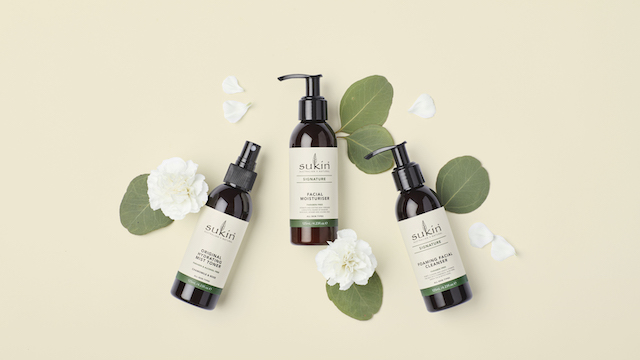

BWX’s signature Sukin 3-step skin cream treatment. It’s been a busy year for BWX chief executive David Fenlon since he took up the role in July last year, between expanding into new international markets and more recently grappling with the effects of Covid-19 at home and abroad. Having spent the year prior as a non executive director of BWX and MD at Australian supplements company Blackmores, Fenlon was in a strong position to lead the business through its next chapter, but no one could
Unlock indepth features,executive

Unlock indepth features,executive
interviews and quarterly magazines
SUBSCRIBE NOW
Already a Premium subscriber? Log in
Just for$39.95per year
BWX’s signature Sukin 3-step skin cream treatment.It’s been a busy year for BWX chief executive David Fenlon since he took up the role in July last year, between expanding into new international markets and more recently grappling with the effects of Covid-19 at home and abroad.Having spent the year prior as a non executive director of BWX and MD at Australian supplements company Blackmores, Fenlon was in a strong position to lead the business through its next chapter, but no one could have foreseen what lay ahead. “It wasn’t something I was looking to do to be honest. I was happily living in Sydney and enjoying being the managing director of Blackmores, Australia & New Zealand,” Fenlon told Inside FMCG. “But there’s something special about this business, something special around its ethos, its DNA, and its mission.David Fenlon, CEO at BWX.“I had the lovely situation that I knew the business, so was able to make a pretty fast start. But the difference between a non executive director and a management job is quite significant. What I’ve learned is that it is all about having a very clear mission statement and joining the organisation up to a very clear set of vision and values.”With a house of brands focused on natural, including Sukin, Mineral Fusion and Nourished Life, BWX was well placed to meet changing consumer needs driven by Covid-19.“There’s been a significant spike in search engine words such as natural, cruelty free, vegan, carbon neutral. Natural is really coming to the fore at a faster rate than we were seeing pre-Covid and we think that will carry on,” he said. At the height of the pandemic in Australia, we saw supermarket shelves stripped of pantry staples such as rice and pasta, and who could forget the pandemonium around toilet paper.But a less obvious trend emerged in beauty and skincare. With salons shut and consumers spending more time at home, sales of DIY beauty products soared.Spike in salesBWX saw a major spike in demand during Covid restrictions, particularly in nail care. “We’ve seen a huge increase in nail care and nail polish in our Mineral Fusion business,” Fenlon said.“Nail varnish remover for example is up about 380 per cent, nail polish is up about 107 per cent, because ultimately, people are still looking after themselves. That’s exactly what happened with the GFC in 2008–2009, people still wanted that little luxury in their lives.”With the five brands sold across Australia, the US, Canada, the UK and select international markets including China, BWX has felt the impact of COVID-19 across various geographies.One of the most noticeable trends has been the shift to online, which was most evident through its online-only business, Nourished Life.“In the US, pre-COVID, about 20 per cent of our business was direct to consumer; that jumped up to about 27 per cent. In Australia, we were historically a bricks and mortar business, selling into retailers, with direct to consumer being about half a per cent. That’s jumped up to about three and a half per cent,” Fenlon said. Sukin hydration products. And while consumers are making fewer shopping trips, Fenlon said they are spending more when they do. “Consumers are after their essential purchases first and spending less time going to retail but when they do though, there’s a deepening of what they spend. They’re still doing an awful lot of research online and affordability is important at this time as well.”As expected, hand wash was in high demand and a shortage of hand sanitiser prompted the company to adapt its lines.“We launched a hand sanitiser under our Sukin and Life Basics brands, from conception to launch in about three weeks, so we”ve certainly seen an uplift in those products.” Being a local manufacturer, with a factory in Dandenong, the business was in a position to make changes to its supply chain and manufacturing. “We were operating a day shift and an afternoon shift and we just pivoted towards having a night shift, which allowed us to increase our production for hand wash and hand sanitiser,” Fenlon said. “The big challenge was finding a bottle that worked, finding a spray that worked and working with Australian providers that we hadn’t worked with before in such a short period of time to find natural ethanol.”Pulling together in a time of crisis Fenlon said it has been uplifting to see Australian businesses band together to find solutions during a really difficult time. “There was no politics, there was no purpose apart from solving the problem of trying to get hand sanitiser in the hands of Australian consumers. “We’re on this small industrial estate with Chobani down the road and other businesses, and people have been so grateful to share. We’ve been sharing forklift truck gas, they’ve been delivering us yogurts, we’ve been dropping them off hand sanitiser … everyone’s been really pulling together.”But beyond manufacturing, there was a whole office-based team that needed to transition to a new way of working. “Out of our total office-based staff, 23 per cent of them didn’t have a laptop. So the first thing we did is solve that problem, which we did in about 48 hours. Then we worked out how we were going to get monitors to people’s houses, how we were going to check how their home office set-up was ergonomically safe.” After shipping off chairs in utes and creating videos to help people understand how to set up their space, they began training employees in Microsoft Teams, communicating via chat and the right approach to video conferencing, interspersed with mental health and wellbeing sessions. “First of all, it was about how to organise yourself, how to work remotely and then it evolved into online yoga and Zumba classes. So every day there is an opportunity to interact with a group of people. “We’ve had great fun dress-ups online, virtual drinks online, and cups of tea. I know more about everybody’s Netflix favourite program, favourite location for a vacation, the famous movie stars that they’ve all met. And it’s amazing, I think it’s connected us more. “What will be the future? I hope this leaves us with a very simple view that we are now about quality of output rather than attendance. Some people love working in an office, some people are adoring working from home, it’s all an individual basis. I think we’ll be more flexible, but I think what will happen is that flexibility is now built on trust.”Despite the impact of COVID-19 and trade tensions between China and Australia, Fenlon believes that ultimately things will work themselves out.“I think we all have to realise everyone’s just working in a little bit more of a stressful environment. The best thing to do is just talk it through and find solutions. It is and will always be a global world. We’ve always had tensions, we always need to find ways of working out. And I just hope that governments can do that,” he said.With international borders closed, Fenlon is grounded in Australia for the foreseeable future and must monitor the international businesses from afar.“It has been the longest time in my 25-year career, I think, that I haven’t been on a plane. And I’m sure many, many people are facing the same challenge. I think each market that we’re in will react and has gone into this crisis at a different speed and will come out of it a different speed. I think, ultimately, consumers will pivot more to online, but I still think there’s a delight and a belief that bricks and mortar experience will still be a significant part of people’s lives. “Economically, I do have some watchful views on what might happen to consumer confidence in all of the markets we’re in, but I am seeing some quite strong recovery. We’ll keep watching carefully, but ultimately, the success of any business is about connecting to consumers. We’ve got great opportunities in various countries and we’ve got lots of new product development on our agenda. If you always focus on delivering for the consumer, then it’s about making sure that’s what drives your success.”