After three years at QSR-firm Subway, Geoff Cockerill joined ATP Science to lead the business’ expansion into the FMCG industry. Here, Inside FMCG talks to Cockerill about ATP’s first stab at the FMCG market, and its plans for what’s next. Inside FMCG: To start with, can you tell me a bit about ATP Science, and its products? Geoff Cockerill: We’re a Brisbane-based company that was founded around 10 years ago by a husband and wife team, Geoff and Tony Doidge, both from a sports nutrit
Unlock indepth features,executive
interviews and quarterly magazines
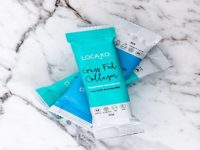
After three years at QSR-firm Subway, Geoff Cockerill joined ATP Science to lead the business’ expansion into the FMCG industry. Here, Inside FMCG talks to Cockerill about ATP’s first stab at the FMCG market, and its plans for what’s next.Inside FMCG: To start with, can you tell me a bit about ATP Science, and its products?Geoff Cockerill: We’re a Brisbane-based company that was founded around 10 years ago by a husband and wife team, Geoff and Tony Doidge, both from a sports nutrition background. We’re focused on everything within the ‘better for you’ category, but we’re known as the Kings of Collagen. We’re very proud of our premium collagen products, and we’ve been able to extend the use of that product to what is our first FMCG product, which is the ‘No-way jelly’ collagen bars. It’s our first entry into the FMCG market, and it’s doing outstandingly well for us at the moment, and we’re planning on doing plenty more in this market now. We’re fortunate that we work across a few industries, and we’re not going to abandon our traditional market and customers, which are specialty health products, supplements, etc. Inside FMCG: Can you tell me a bit about the collagen bar itself, and the market around that? What are the benefits for customers?What we’re proud about is that it contains 20 grams of protein. It’s low in sugar, and it’s a better-for-you protein bar. We’re not here to bad mouth the other protein bars, but they’re traditionally high in sugar and have a lot of artificial colours and flavours. Our bars have taken the founders over five years to finesse. They launched another bar a few years ago, and didn’t get it quite right, and they pulled it off the market – it didn’t hit their aspirations of quality. But this bar has. Its jelly-like texture is similar to a Turkish delight and comes in three flavours at the moment, with more coming out. At this point, Woolworths are basically buying every bar that we make at the moment, and that’s a real juggle for us. Our traditional customers see that as irregular from us, so we’re balancing that. IFMCG: What did they learn from that initial launch?What we learned was that taste is everything. We didn’t want to compromise on the quality of ingredients or anything, but realised we needed to work on the texture and taste, and so what we did was invest in a $20 million facility at Meadowbrook, which has some state-of-the-art machinery that was brought in from overseas to actually make the bar to their quality levels. That’s also a bit of a challenge, because it makes the bar a bit expensive to make. It’s not at the point where we are mass producing just yet.The other key area is that they’re gluten-free, nut-free, and they’re colour-free. There’s no artificial sweeteners or flavours in there, which is very rare in bars. The other thing that makes it a bit more appealing, and this is why Woolworths love it, is because it has a short lifespan – it’s fresh. We’re talking about a protein bar that is considered a fresh product, our stock turnover and production schedule has to be more regular, and Woolies love that. They vary by flavour, but they tend to last between three and six months. IFMCG: So, if everything you’re producing has been more or less going to Woolworths, are you planning to ramp up production moving forward?Yeah, absolutely. We’re putting on additional shifts at the manufacturing facility to cope with it, and we’re in full production now. We’re now in supply across the market, so there’s been truckloads going all over Australia.IFMCG: You mentioned earlier that you want to go deeper into FMCG territory, what are the business’ growth plans for the FMCG space?We’ve got a hell of a lot to do in Australia and New Zealand, but at the moment up to 30 per cent of online enquiries are coming from the US. We did a lot in the US before the pandemic, so we’ve got some ambitious plans to grow globally, though our focus is currently on growing in the FMCG space in Australia.And so what will that look like? It’ll be an extension of flavours of the collagen bar, and we’ve also got a new product coming soon that’s still in that better-for-you world, but is closer to a treat. It’ll still have the same high protein, low sugar formula, but will be a different product. From there, it’s endless. We can do multipacks, we can do bite-sized versions, there’s a whole lot in that area that we’re going to map out as we go forward. IFMCG: In terms of international expansion – I believe you’ve talked about expanding to Asia as well, can you tell me a bit about those plans?We’ve appointed distributors in Taiwan, and we’re close to appointing some partners in China which will be through Southeast Asia. We want to be right through Asia. We also have partners in the United Arab Emirates that are also inquiring about further growth, and we’re managing our resources at the moment so haven’t had the time to develop that market up, but we will. Our ultimate view is to be global.