
A more phased approach to South Australia’s proposed ban on plastic non-compostable Price Look-Up (PLU) code stickers on fresh produce is being called for by the International Fresh Produce Association A-NZ (IFPA).
In its submission to South Australia’s proposed amendments to the Single-Use and Other Plastic Products (Waste Avoidance) Act, set for this year and next, IFPA highlights the challenges the produce sector faces leading up to the September 1, 2025, enforcement date of the PLU sticker ban.
The IFPA, leading retailers, and The Australian Fresh Produce Alliance (AFPA) suggest moving the deadline to 2028 for a full adoption of compostable stickers.
Ben Hoodless, the IFPA’s managing director, said that while the organisation supports reducing plastic waste, there is not “enough time” to implement the PLU changes.
“We would prefer a nationally consistent approach rather than a state-based approach as growers currently manage regulations for multiple regimes,” Hoodless continued.
“This adds undue complexity to an already challenged supply chain, and with the ban coming in, may create an extra barrier for those supplying to South Australia.”
He highlighted concerns over the readiness of growers, packers, and retailers to comply with the ban within the given timeframe, suggesting that a fragmented approach might exacerbate these challenges.
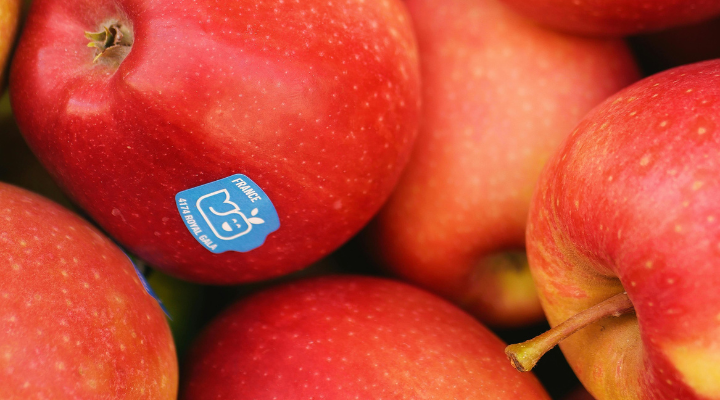
PLU stickers, commonly made from plastic and used to label fresh produce sold loosely and by weight, are critical for accurately identifying and pricing products at the point of sale. They also play a crucial role in food safety and traceability.
Alas, the environmental impact of these non-compostable stickers, particularly their adhesive components, has prompted calls for more sustainable alternatives.
Because of these challenges, the IFPA acknowledges the emergence of technological advancements, offering alternatives to traditional PLU stickers, including compostable stickers and laser etching.
Under the proposed changes, AS-certified compostable plastic produce stickers – which break down within three months – will be allowed, as will paper stickers and laser or similar technology.
However, Hoodless said the commercial availability of these solutions, especially compostable adhesives, remains limited globally.
“For fresh produce stakeholders, alternatives need to be cost-effective and scaleable, with workable timeframes to allow growers to place orders, test and implement,” he concluded.