FMCG companies are constantly looking to innovate to stay ahead of their rivals, but creating a concept in-house takes time and can be expensive – from the data that’s needed to validate assumptions to the interruption to normal production flows when testing new products.
Since 1951, Tetra Pak has been known as a supplier of equipment and packaging cartons but over the years the company has recognised that the needs of its brand owner customers extend way beyond finding these solutions.
“The critical challenge has always been the speed at which innovation can be successfully delivered,” explains Jaymie Pagdato, sales director at Tetra Pak. “New product development is iterative and requires validation and often, it can be difficult to deliver incremental profit to the business immediately.
“That said, innovation is referred to as the lifeblood of business, so we go where our customers go – including here in Australia and New Zealand – we are here to work with brand owners and support them across the product development cycle as relevant, whether they be a startup, an emerging brand or a well-established market leader.
“They all share a common goal – the need to drive and deliver sustainable, profitable innovation,” explains Pagdato.
“Tetra Pak works with marketing and innovation teams, sharing relevant consumer insights, providing input to formulation work through what we call Product Development Centres, and developing packaging prototypes to help bring the concept to life.”
Through Tetra Pak’s global network, the company can share manufacturing and product trends, whether it be in ingredients, categories, food or ready-to-drink beverages. “We share those insights and exchange information to help shape possibilities for the local market. We respect brand owners know their brands and their categories well, but we can provide supplementary information to help them accelerate their decision-making,” Pagdato explains.
Sustainability on every manufacturer’s agenda
Sustainability has always been part of the company’s DNA, says Pagdato, but in recent years, most discussions with clients have been led by it.
“At Tetra Pak, sustainability solutions are not limited to packaging. We have a solution for more sustainable manufacturing operations, such as energy reduction and the reduction of chemical use and waste.
For packaging, Tetra Pak cartons are made mostly from plants, and caps can be made from sugarcane so that they have a lower carbon footprint compared to fossil-based plastics. The company continues to innovate, whether it’s around including recycled content in packs or increasing renewable content to help lower carbon emissions.
When it comes time to upgrade processing and packaging machinery, within Tetra Pak’s services business, the company works with manufacturers to help ensure that machine rejuvenation and overall operations not only deliver greater efficiency and flexibility where possible but can also be more sustainable – such as by using less water or running on less energy.
“When I started at Tetra Pak six years ago, the topic of sustainability was already a part of the conversation, but the discussions were far and few between. But now, there is no engagement with any brand owner that does not include sustainability in the agenda,” she recalls.
“A lot of the companies we work with have a sustainability platform or an agenda and so our responses and our solutions cater towards meeting those respective objectives. More and more we are seeing sustainable practices as a licence to operate.”
Product Development Centres help with small-scale concept testing
Insights and market trends are just some of the ways Tetra Pak can help with the decision-making agenda and accelerate innovation for FMCG companies.
Tetra Pak has also invested in product development centres (PDCs), small-scale pilot plants that brand owners can use to formulate and conduct initial product trials, to gauge their feasibility – all the way to consumer validation.
“The benefit of that is that brand owners don’t need to disrupt their commercial operations to be able to run a trial for a new product and we can do it in small batches.” Also, if the formulation, flavour or colour of a concept is not optimal, the company is not throwing away a lot of product.
Because Tetra Pak has invested in creative and analytical tools to help assess relevant categories, the company can help manufacturers with market research as well. “We can exchange notes with the brand owners to see if the brand launched is providing incremental growth to the category, if it has increased consumption or, for example, if a brand is very successful in the breakfast occasion, if it can stretch to an afternoon snacking occasion, or a dessert perhaps.
“Every brand is different. No brief has been the same and therefore the solutions are also different”
While Tetra Pak may be best known for milk and juice packaging, across its global network it produces packaging solutions for soups, baby food, food supplement and nutrition products, coffee, sports and nutrition, and even alcoholic beverages such as wine and cocktails.
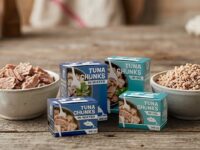
One successful Australian partnership for Tetra Pak was with the century-old canned soup brand Rosella. When the brand was relaunched in 2022, it wanted to add another ‘tone of voice’ around the brand’s personality, which is anchored in sustainability. Adopting a carton solution allowed the company to retain the nostalgic sense of the brand that consumers are familiar with, while also invigorating the proposition with packaging innovation.
“We like to work with brand owners, regardless of the journey they are in, whether it’s in an innovation cycle or their sustainability cycle. We are here, ready to enable and support their ambitions.”