
Kraft Heinz reported weaker-than-expected Q3 results as ongoing cost pressures and soft consumer demand continued to weigh, leading the food giant to lower its FY25 forecast.
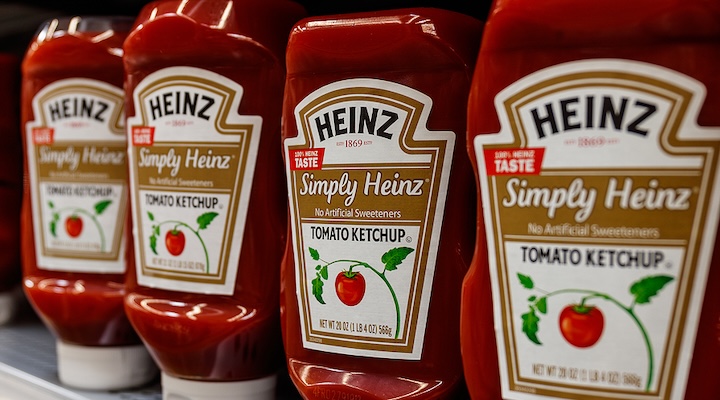
The company, known for Heinz Ketchup and Kraft Mac & Cheese, posted net sales of US$6.24 billion globally, down 2.3 per cent from the same period last year, with organic sales falling 2.5 per cent.
Adjusted operating income declined 16.9 per cent to US$1.1 billion, a nearly 19 per cent drop from a year ago.
“Our third quarter results reflect a modest year-over-year improvement in our top-line performance relative to the first half of the year,” said Carlos Abrams-Rivera, CEO of Kraft Heinz.
North America, Kraft Heinz’s largest market, continues to face headwinds as consumers tighten spending on pantry staples.
Net sales in the region fell 3.8 per cent, driven by a 4.2-point decline in volume and mix. In contrast, international developed markets saw net sales rise 1.6 per cent, while emerging markets, including western and eastern emerging markets, and Asian emerging markets, grew 3.8 per cent.
“The company’s struggles with volume declines across iconic brands like Heinz and Kraft Mac & Cheese underscore a fundamental challenge: maintaining premium positioning while staying relevant to evolving consumer needs,” said Daniel Binns, global CEO of brand consultancy company Elmwood.
According to Binns, heritage brands need to demonstrate their value in ways that are both visible and relevant, through innovation, refreshed storytelling, or richer consumer experiences.
“I believe consumers need to perceive brands as “meaningfully different” to accept premium pricing. Simply being “reassuringly expensive” no longer suffices,” he added.
Looking ahead, Kraft Heinz confirmed that its planned split into two public companies remains on track for the second half of next year.
One entity, Global Taste Elevation Co, will include Heinz, Philadelphia, and Kraft Mac & Cheese, while the other, North American Grocery Co, will house a scaled portfolio of North American staples, featuring three billion-dollar brands: Oscar Mayer, Kraft Singles, and Lunchables.
“I’m confident the separation will allow each business to better focus resources, improve execution, reduce complexity, and drive further efficiencies,” Abrams-Rivera said.
Binns also noted that Kraft Heinz’s planned split could allow portfolios to pursue distinct strategies. The core challenge, however, is that heritage brands must evolve thoughtfully, engaging consumers while maintaining their price premium through real benefits and authentic differentiation, not just nostalgia.