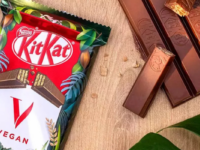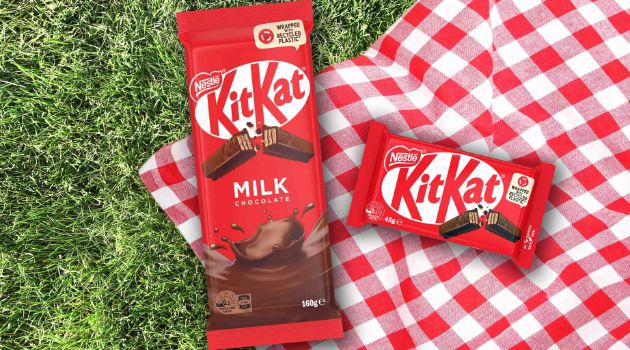

A limited run of KitKat 4 Finger bars is now available across Australia in packaging made from locally produced recycled polypropylene (PP).
The trial between Viva Energy and Nestlé is testing the conversion of soft plastic pyrolysis oil into food-grade recycled PP.
The trial covered the production chain in Victoria. Last year, Viva Energy processed more than 9.5 tonnes of pyrolysis oil from plastics at its Geelong Refinery.
About 5 tonnes of the resulting recycled PP was used to produce 7 million ISCC-certified KitKat wrappers in March, involving Taghleef Industries and Amcor. The limited run of KitKat 4 Finger bars now uses some of these wrappers.
The trial used pyrolysis oil from plastic imported from Alterra in the US, because suitable materials were not available in Australia at commercial scale. ISCC certification was applied across the production chain to enable traceability of the recycled material.
According to Viva Energy, its Geelong Refinery and adjoining polymers plant together form the only facility in Australia with this capability. The facility can chemically recycle waste soft plastics into food-grade plastic feedstock.
“We have proven the use of soft plastics pyrolysis oil as a feedstock and demonstrated how existing industrial infrastructure can be adapted to support a circular plastics economy,” Viva Energy executive GM energy and infrastructure Bill Patterson said.
The trial follows a partnership between Viva Energy and Nestlé in 2022. The companies first used recycled soft plastic packaging for KitKat 4 Finger that year. Nestlé Oceania confectionery GM Andrew Lawrey said the trial could inform future packaging design and recycling processes at commercial scale.
“Soft plastic should be treated as a key material, not a waste stream,” Lawrey said.
Scaling the model will depend on domestic feedstock supply. It will also require collection and sorting systems, recycling infrastructure and an extended producer responsibility scheme. Patterson said the Geelong Refinery could process more pyrolysis oil if policy settings were in place.
Viva Energy and Cleanaway are continuing a feasibility study into a large-scale plastics recycling project. The Front-End Engineering and Design (FEED) phase is expected to begin after the Australian Government finalises details of its packaging reforms.
- Further reading: KitKat follows the ‘rawdogging’ trend in latest campaign.