The changing preferences and values of today’s consumers are driving a significant trend in the food and beverage retail landscape. The heightened awareness of health, sustainability and ethical sourcing is creating a paradigm shift for greater transparency and accountability from brands.
Consumer-brand interaction has changed. Consumers want companies to help lead sustainability efforts and want to associate with brands that are authentic in those efforts. A report by Ernst and Young Australia Make Sustainability Accessible to the Consumer, reveals “80 per cent of global consumers believe brands must be transparent about their environmental impacts in the production of their goods and services”.
Lead the market
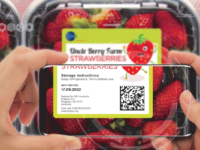
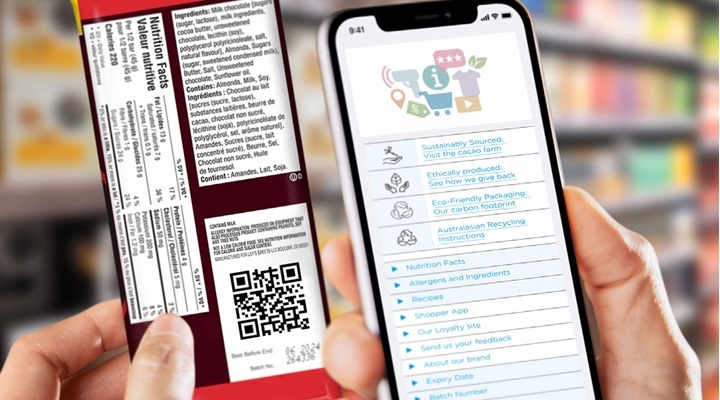
The brand-consumer trend presents an opportunity for brands to lead the market with increased consumer trust. Imagine a world where your brand could connect directly to the hearts and minds of your consumers, on-demand. Delivering tailored, accurate information in real time. Sharing sustainability credentials, nutritional facts, recycling methods, batch details, ingredient origin, promotions, loyalty programs and even recall alerts – all easily accessible by the consumer through a single on-pack symbol that will go beep at the checkout in the future.
GS1 Powered QR Codes
Not-for-profit organisation GS1 has introduced the next generation of QR Codes. GS1 Powered QR Codes (a type of 2D barcode) is unlike traditional 1D linear barcodes, it is a dynamic code that can connect to limitless amounts of information.
Imagine a consumer picking up a chocolate bar and scanning the GS1 Powered QR Code, and instantly multiple links from different sources appear, including a video of the farm where the cacao was organically grown, credentials for sustainable cultivation methods, the journey it took to reach the store shelves and the function for consumers to provide instant feedback to the brand. This level of transparency not only builds trust but empowers the consumer to make informed purchasing decisions that are associated with their values and social conscience.
Align with government initiatives
The adoption of GS1 Powered QR Codes by the food and beverage industry aligns with the broader sustainability initiatives and regulatory requirements of the government. As concerns regarding environmental impact and resource depletion continue to grow, governments and industry bodies are implementing measures to promote eco-friendly practices and circular economies.
Reports from industry sources outline the pressing need for sustainability in consumer goods. The Australasian Recycling Label Consumer Insights Report April 2022 declares: “The appetite for information about recycling remains steady, with two in three consumers interested in receiving more information about what they can and can’t recycle”.
The implementation of GS1 Powered QR Codes by food and beverage companies is a powerful tool for advancing sustainability messaging and transparency in the industry. By providing consumers with instant access to current and comprehensive information about the products they purchase, GS1 Powered QR Codes enable individuals to make educated choices.
Update to GS1 Powered QR Codes
Updating to GS1-powered QR Codes does not require an extensive overhaul of business processes and systems. By incorporating a GS1 Digital Link into QR Codes, brands can offer consumers a more personalised experience at every stage of their purchasing journey, unrestricted by on-pack space. Brands can even update the QR Code web links without having to change the packaging and that’s a big saving.