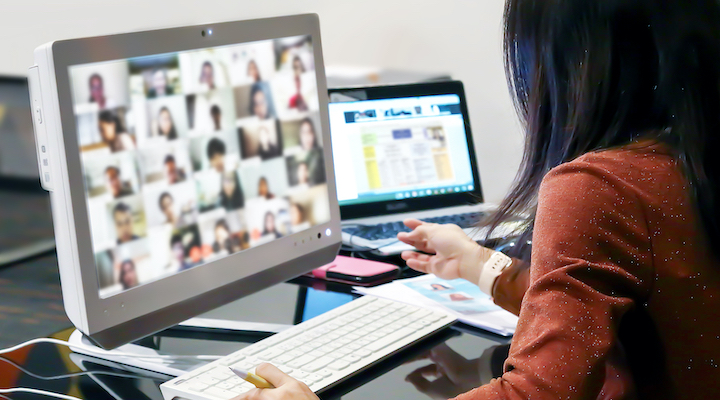
The pandemic workday can feel like groundhog day, with increased workplace stress, never-ending zoom meetings and the blurring between home and work life, leading to mounting evidence that productivity and employee wellbeing are both falling. Using data drawn from parts of Europe, Israel and the US during their first Covid-19 lockdown, researchers from Harvard Business School found that employees were attending more meetings and working longer hours. However, meeting duration decreased. The empl
Unlock indepth features,executive
interviews and quarterly magazines
The pandemic workday can feel like groundhog day, with increased workplace stress, never-ending zoom meetings and the blurring between home and work life, leading to mounting evidence that productivity and employee wellbeing are both falling.Using data drawn from parts of Europe, Israel and the US during their first Covid-19 lockdown, researchers from Harvard Business School found that employees were attending more meetings and working longer hours. However, meeting duration decreased.The employee work-from-home experience is different, given people’s varying circumstances. What’s common is that humans are tribal creatures who are hardwired for connection. Part of the happiness people experience at work comes from the banter and conversations they have with colleagues. Working from home doesn’t end this, but finding joy in your working day currently takes more effort and focus. Here are some ideas to get you started.Make connection matterIf you are a leader, set regular times to meet with your team members – collectively and individually. These check-in conversations can be both casual and formal, sometimes focusing on deliverables and other times focusing purely on relationships. These connection points are an excellent opportunity to offer support, build engagement and sustain motivation.Zoom fatigue is realSitting down and participating in online meetings all day is exhausting. This exhaustion derives from the fact that looking at a screen and being on the phone all day uses additional energy reserves. For introverts, in particular, this challenge is exacerbated. It’s important to recognise this and provide options, so there is space to reflect and quiet time. Not all conversations need to be face-to-face; some can be done equally as well via phone or other communication methods. Start noticingBe alert to the warning signs of burnout in yourself and others. These signs may include feeling ineffective and more cynical, having reduced energy, motivation and efficiency, and being more frustrated and irritable. Notice if your team members and colleagues are working excessively hard or doing lots of overtime and yet their productivity is waning. Check in on how they are feeling and offer individual support.Set boundariesAs a team agree on the boundaries as to what’s acceptable regarding requests for work outside standard working hours. This simple practice makes it easier for team members to have boundaries between work and home life and to be okay with not responding to emails or phone calls in personal time. Find your routineTo stay motivated and focused, set a routine with a start and finish time, and include scheduled breaks.The night before, write down the list of activities and projects you want to progress and accomplish the next day. For each of these tasks, time-block the amount of time you want to spend on them. Working in 30- to 60-minute blocks is the most effective, with research showing this is the optimal length for which your brain can focus. After each time block, get up and move.Keep movingTake regular breaks during the day, and ideally once a day go outside your home office. For example, put your ear-pods in and hold your meeting while you are walking. Do some stretching, deep breathing and meditation.The key is to get away from your desk because by shifting your environment, you alter your state, helping to reset your mindset and get a fresh perspective. Set up your environmentFind ways to make your home workspace aesthetically supportive and, where possible, have a designated workspace with natural light. Consider noise levels, lighting and things that may distract you. The key is to set up your space so that it is a place you want to come and work at each day. For example, buy plants, a scent diffuser or chair which is ergonomically supportive.Step up and lead Leadership matters no matter the working environment – be it the office or home. The best leaders are stepping up to this current challenge, reaching out to their team members to understand what support they need. They recognise that while there are universal human reactions to change and uncertainty, individual team members will have different needs.Working from home means that leaders need to pay more, not less, attention to the team’s dynamics. People want to feel they matter and to know they are valued.