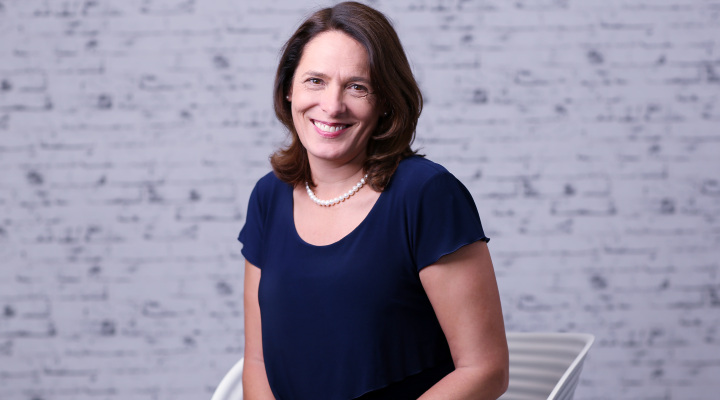

After 18 years at FMCG giant Kellogg’s, the last three as managing director of the ANZ business, Esme Borgelt has taken the plunge into the start-up world, taking the leading role at Melbourne-based food manufacturer Kinrise. Described by Borgelt as a “start-up with scale”, Kinrise is a 3-year-old, family-owned Australian business with around 850 employees across NSW, Queensland, and Victoria. Its portfolio includes products across breakfast, baking, bakery, biscuits, and snack
Unlock indepth features,executive

Unlock indepth features,executive
interviews and quarterly magazines
SUBSCRIBE NOW
Already a Premium subscriber? Log in
Just for$39.95per year
After 18 years at FMCG giant Kellogg’s, the last three as managing director of the ANZ business, Esme Borgelt has taken the plunge into the start-up world, taking the leading role at Melbourne-based food manufacturer Kinrise. Described by Borgelt as a “start-up with scale”, Kinrise is a 3-year-old, family-owned Australian business with around 850 employees across NSW, Queensland, and Victoria. Its portfolio includes products across breakfast, baking, bakery, biscuits, and snacks categories, produced locally by brands such as Cobs Fine Foods, Green’s Foods, Susan Day Cakes, and Ozpack.Speaking exclusively to Inside FMCG, Borgelt discusses the emotional decision to move on from Kellogg’s, the importance of supporting local suppliers through Kinrise, and how she plans to set the business up for growth.Inside FMCG: Firstly, congratulations on your new role at Kinrise. Can you tell me about the thinking behind your decision to move from industry giant Kellogg’s to a start-up business?Esme Borgelt: To be completely honest, it was an emotional journey for me to make this decision. I’ve had an amazing 18 years with Kellogg’s and the last three years leading the ANZ business was a huge honour. We did some fantastic things, built some beautiful brands … but when I give advice to people starting out in their careers, I tell them that to truly develop and learn you have to stretch yourself outside of your comfort zone; you have to feel deeply uncomfortable, because that’s where you really learn. I got to the point where I had to take my own advice, so I made this decision, ripped away my own safety net and took a big jump to do something a little different. IFMCG: What was it about Kinrise that appealed to you?EB: I can probably sum that up in three words: velocity, accountability, and impact. Kinrise is a truly local company and can make real-time decisions and to be honest after being in the business for three months now, it’s very clear that the only limitations on our ambitions and the impact that we can have are the goals we set for ourselves. It’s pretty exhilarating working in an environment like that. The other thing that has surprised me as I’ve come into the role is, we’ve got such a diversity of talented people in the business, but they all have one thing in common and that’s this entrepreneurial streak. [They really believe] ‘We can make a difference, we can always find a way and create value’. And I think that’s the wonderful thing about a start-up, the amount of energy that comes along with that.We call ourselves a startup with scale. We’ve got some amazing brands in our business, like Cobs, Poppin and Green’s. The challenges Australians faced over the last year, being at home in lockdown, homeschooling and all of that, it’s been tough. Brands like Green’s in particular, being largely founded in cake mixes, really brought people together to do something fun and wholesome together. IFMCG: How has the company developed in the last year?EB: We’ve continued to invest in our business. We’ve reorganised our business in the last year to create deeper expertise, focus, and capabilities in categories, with consumers at the heart of that. We’ve invested major capital, largely in the back end, around being able to innovate around new foods and new formats. Our supply-chain transformation is well under way and we think this is going to be key to our future growth within the business. All of this is around local talent, local investment, and deeply understanding local consumers. You can’t talk about being local and being close to local consumers without acknowledging that what they are demanding of us is to implement sustainable practices in our business. IFMCG: What makes Kinrise food products “more thoughtful” and “more human” than other brands on the shelf?EB: Kinrise is a local company, we are a family-owned company. We are from here, for here. Our specialty is around building and transforming local brands, really putting local talent on the map and putting Australian families at the forefront of what we do to make sure we stay abreast of what their needs are. We largely source local ingredients and even in those instances where ingredients are not available locally and we have had to source from abroad, we invest and work with local suppliers to build the capability within their own business so that we can switch sourcing to local. We’ve worked with a company called EvoFarm to switch our source of supply on corn to local Aussie farmers, and we’ve gotten really close to the farming community in that space. Today, all the corn that we use to make Cobs and Poppin popcorn is sourced from local farmers and this wasn’t the case a few years ago.I think this is a huge competitive advantage for us. By investing in our business, we’re investing in the local economy, we’re developing local suppliers, and it becomes this virtuous circle that’s supported by people with a shared mindset within business. We often have the ambition in big organisations to instil that owner’s mindset or the soul of a startup within businesses, and that’s the feeling you get when you step through the different business pillars within Kinrise – our people really care about the craft. We tend not to say that we ‘produce food’ or we ‘manufacture food’ because who wants to eat manufactured food? You want to eat something that’s been made with love and care for you by another human being.I often say ‘speak human, don’t speak corporate’, because ultimately we are all people and intrinsically have the same wants and needs and I think you’re just better able to identify with your consumers and meet their needs when you truly understand and empathise with people.IFMCG: What key customer behaviour trends will you be tapping into to grow the business in 2022? EB: As we prepare for 2022, there are a few things for us. It’s tapping into personalisation, convenience, purposeful sustainability, right through the organisation because consumers truly care about that. If I look at our long-term goal in Kinrise, it is to triple our business in a decade. So, 2022 for us is a really important year to accelerate the momentum we’ve built up in the last 12 months, and it will be built around these intrinsic pillars. I think innovation is an important one, new and different, as we lean forward into our branded businesses and make them more meaningful. Then, of course, we need to continue building partnerships with customers because I think that’s where you reach consumers in a meaningful way through different channels, and the right portfolio of product. Occasions are a key theme within our business. They’re not just about having the right food in the right format for the right date, but, as we are founding our business in wholesome family values, they’re about bringing people together around those magic moments. How we do that is a big part of our acceleration plan for next year. We’ve got a massive, by our standards at least, capital plan within our business to continue transforming and investing in those capabilities that enable us to meet those needs, not just on our own brands but also for the partnerships that we build with others across the market.IFMCG: Do you foresee growing the team, adding new facilities, acquiring new brands? What will that look like? EB: I won’t rule out any of those options. We like to think we’re thinking boldly, we’re dreaming big. We love talking to like-minded entrepreneurs in the market about how we can potentially help each other. I think, organically, our business has got a huge appetite for growth and I think the plans are in place to do that. Expanding our footprint is absolutely on the cards in the next 10 years.