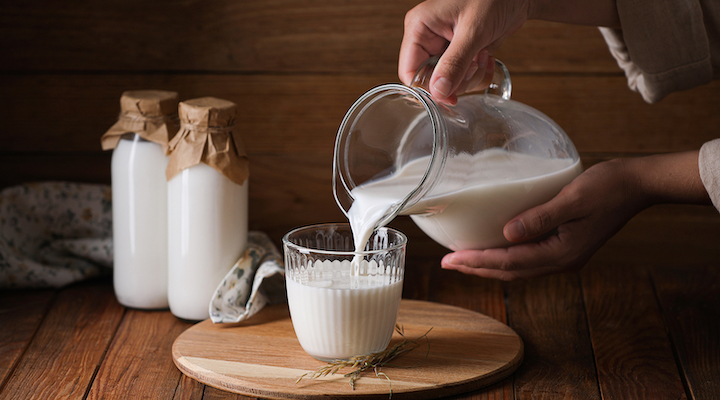

Rabobank has reported that dairy product costs are rapidly growing, with milk prices rising at the fastest rate.
Despite the Australian consumer’s resilience in the face of cost-of-living challenges, Rabobank claims in the Global Dairy Quarterly Q4 2022 – Walking the Tightrope into 2023 that there are signals of dairy demand deterioration as “willingness and ability” to spend on discretionary products diminish.
“For Australia’s dairy producers, farmgate margins remain positive and are supported by the record milk prices,” said report co-author Michael Harvey, senior analyst for dairy and consumer foods at Rabobank.
“Average farmgate milk prices across Australia’s Southern Export regions range between A$9.50-10/kgMS.”
He said the high milk prices have largely compensated for the main cost headwinds facing dairy farmers, such as the cost of fertiliser, fuel, and feed. However, labour availability continues to be a big issue for dairy farming enterprises.
According to Harvey, Rabobank does not expect any further significant increases in milk prices as the season winds down. The report said Australian milk output is down 6.6 per cent for the season to date as of October, with declines spreading across all regions.
Strong export prospects
Despite a decrease in milk production, Australia’s dairy exports continue to expand. This is the result of improvements in global freight markets and the normalisation of consumer behaviour in Asia’s export markets following Covid.
Rabobank expects the global milk supply ‘recession’ that has lasted five quarters to end, with production progressively declining over that time. According to the analysis, milk production in the key seven dairy exporting regions – New Zealand, Brazil, Argentina, Uruguay, the EU, the US, and Australia – is expected to expand by 1 per cent year on year, enough to offset a 0.8 per cent reduction this year and keep on par with the production of last year.
Meanwhile, Rabobank warned that demand growth in several export regions is becoming more difficult due to considerable price hikes in the dairy cabinet.