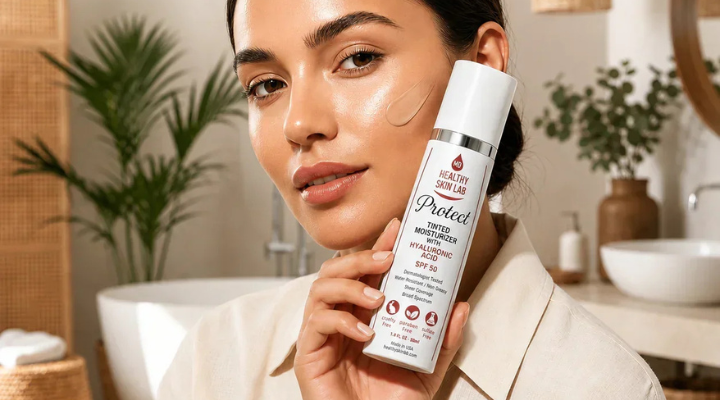

Kiwi skincare startup Healthy Skin Lab is seeking to raise US$4 million to expand its core business in the US, following the successful launch of its tinted moisturiser on Amazon.
Founded by skin cancer specialist Sharad Paul, the brand went ‘viral’ in the country for its Protect tinted sunscreen, dubbed a “holy grail” by beauty influencers.
“The original idea was to put it on Amazon and see whether the product had a market,” said Paul.
“There was no major marketing campaign behind it, no influencer programme and no large team driving it. What has been significant from a business perspective is that customers found it, reviewed it, and kept buying it.”
The funding would be used to appoint a CEO and operational team, expand manufacturing capacity, increase inventory, accelerate Amazon and direct-to-consumer sales, and build the capability to enter wholesale and physical retail channels.
“The business has reached the point where the limitation is no longer whether there is demand. The limitation is whether we can manufacture enough, hold enough inventory, and build the team needed to support larger channels.
“The right investor is likely to be someone who understands the US market, consumer health, pharmacy, e-commerce, or retail distribution,” he said.
While the formulations were developed from New Zealand-based research, the products are manufactured in the US to meet regulatory requirements.
Healthy Skin Lab currently offers eight products across sun protection, anti-ageing, brightening, and skin barrier repair.
Paul said FDA registration would support the brand’s expansion beyond e-commerce into pharmacies, dermatology clinics, and mainstream retail.
“In the US, sunscreen sits in a regulated category. That makes the process more demanding, but it also gives a product greater credibility when it meets the required standard,” he said.
“For us, the FDA registration creates a platform for conversations beyond e-commerce. It gives the company the ability to look at pharmacies, dermatology clinics, healthcare partnerships, and larger retailers that require properly registered inventory.”